The New Jesuit Pope & His Dark Past

JESUITPOPE

TheHuffingtonPost.Com

The election of Pope Francis, previously Cardinal Jorge Mario Bergoglio, has resurfaced a decades-old controversy surrounding the kidnappings of two Jesuit priests.

Bergoglio was a high-ranking official in the Society of Jesus of Argentina when a military junta was installed in the South American country in 1976. According to the Los Angeles Times, priests Orlando Yorio and Francisco Jalics were kidnapped in May of that year by the navy. “They surfaced five months later, drugged and seminude, in a field,” the Times reported. A 2005 lawsuit accused Bergoglio of unspecified involvement in the abductions. Reuters explains that “the military government secretly jailed [Yorio and Jalics] for their work in poor neighborhoods.”

A spokesman for Bergoglio called the claims “old slander.”

Reuters has more details:

“According to “The Silence,” a book written by journalist Horacio Verbitsky, Bergoglio withdrew his order’s protection of the two men after they refused to quit visiting the slums, which ultimately paved the way for their capture.Verbitsky’s book is based on statements by Orlando Yorio, one of the kidnapped Jesuits, before he died of natural causes in 2000. Both of the abducted clergymen survived five months of imprisonment.

‘History condemns him. It shows him to be opposed to all innovation in the Church and above all, during the dictatorship, it shows he was very cozy with the military,’ Fortunato Mallimacci, the former dean of social sciences at the Universidad de Buenos Aires, once said.

Those who defend Bergoglio say there is no proof behind these claims and, on the contrary, they say the priest helped many dissidents escape during the military junta’s rule.”

Per the Associated Press, “Yorio accused Bergoglio of effectively handing them over to the death squads by declining to tell the regime that he endorsed their work. Jalics refused to discuss it after moving into seclusion in a German monastery.” Bergoglio discussed the incident with Sergio Rubin, his authorized biographer.

More from AP:

“Both men were freed after Bergoglio took extraordinary, behind-the-scenes action to save them – including persuading dictator Jorge Videla’s family priest to call in sick so that he could say Mass in the junta leader’s home, where he privately appealed for mercy. His intervention likely saved their lives, but Bergoglio never shared the details until Rubin interviewed him for the 2010 biography.”Bergoglio testified about the matter in 2010 after twice refusing to appear in open court, but “his answers were evasive, human rights attorney Myriam Bregman said.”

Related articles are listed below:

  1. Radical Takerover Pt. 5 – Rome’s Social Justice & Communism
  2. Giovanni Battista Nicolini’s History of the Jesuits (1854)
  3. Roman Catholic Church Opposing Same-Sex Marriage
  4. Little Horn Pt. 2

Authors of Confusion Pt. 26 – Evangelicals vs The Bible’s Account of Creation

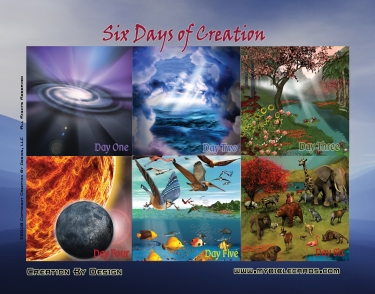
6 day creation

Proverbs 30

5    Every word of God is pure; He is a shield to those who put their trust in Him.
6    Do not add to His words, Lest He rebuke you, and you be found a liar.

Psalm 12

6    The words of the LORD are pure words, Like silver tried in a furnace of earth, Purified seven times.
7    You shall keep them, O LORD, You shall preserve them from this generation forever.
8    The wicked prowl on every side, When vileness is exalted among the sons of men.

Romans 3

4 … Indeed, let God be true but every man a liar. As it is written: ” That You may be justified in Your words, And may overcome when You are judged.”

ChristiansPress.Com

A noted biblical apologist and expert on creationism is calling out several of his colleagues. An audience of some 300 people at the recent National Religious Broadcasters (NRB) convention in Nashville were socked to learn of the number of evangelical leaders who don’t believe in a literal 6 days of creation narrative.

At the recent NRB convention Ken Ham, president and founder of Answers in Genesis and the Cincinnati-based Creation Museum, gave a lecture entitled, “The Age of the Earth, Biblical Authority, and the Downfall of the USA.”

During his presentation Ham showed video clips of prominent evangelicals to illustrate how some modern Christian theologians are, what he calls, compromising the Word of God.

He believes in a literal interpretation of the creation account found in the Book of Genesis.

“I’m not attacking these people personally and I’m not saying they aren’t Christians or preach the Gospel or I don’t respect them,” Ham told Christian Press News. “I’m dealing with a particular issue that is important in which God’s Word is being undermined. Wittingly or unwittingly many of these famous Christian leaders are really undermining the authority of the Word of God.”
Ham mentioned, in particular, John Piper, founder and teacher of desiringGod.org and chancellor of Bethlehem College & Seminary, co-pastor of Saint Andrew’s Chapel in Sanford, Fla. Dr. R.C. Sproul and Mark Driscoll, founding pastor of Mars Hill Church in Seattle, Washington, as Christian leaders who have drifted away from teaching a young earth perspective.

“Many Christian leaders today will say ‘who cares what Genesis says and what does it matter about the age of the earth as long as you trust in Jesus. We need to go out there and preach the Gospel,’” said Ham. “But the point we need to understand is the Gospel comes from this book called the Bible and if generations of people have been led to believe they can’t really trust the Bible or lead to doubt that you can trust its authority or doubt its history – eventually they will reject the Bible and won’t listen to the Gospel.”
During a recent interview on the Bill O’Reilly show, Dr. Robert Jeffress, pastor of the First Baptist Church of Dallas, acknowledged his belief that the earth could have been created 13.7 billion years ago.

“I think it very well could have been,” Jeffress told O’Reilly. “One of the things fundamentalist Christians mess up on is they try to say the earth is 6,000 years old. The Bible never makes that claim.”

Ham denounced Jeffress statement maintaining the Bible makes no such claim that the earth is billions of years old.

“Pastors need to be told that when you do that, you undermine the authority of Scripture,” Ham said. “They are helping atheism by undermining the authenticity of the word of God.”


Catholicism Crisis of Faith


baalworship

The following link entitled “Catholicism Crisis of Faith” is a documentary of Catholics, and ex-Catholics, who speak about their beliefs, their concerns over the doctrines of Roman Catholicism, why they are no longer Catholics, and Catholicism’s contradiction to the clear teachings of Scripture about salvation.

Related are articles are listed below:

  1. Little Horn Pt. 3
  2. Papal Immunity for the Lawless One
  3. Radical Takerover Pt. 4 – Rome’s Crusade of Genocide in Rwanda

Little Horn Pt. 3

eucharist

The kingdom of the “little horn”, which came after the rise, and fall, of Medo-Persia, Greece, and pagan Rome, which are the kingdoms of silver, bronze, and iron, of Daniel’s prophecy (Daniel 2:27-45), is the Holy Roman Empire. The capital of the empire is Rome, which has been known as “the city of seven hills” throughout history. The religion of Rome, which is Roman Catholicism, ruled over the empire, and was used by Satan as a weapon against the gospel of Jesus Christ, his church, and the Jewish people, throughout its reign. This religious persecution has killed approximately fifty million people by way of its inquisitions, and crusades against Jews, Christians, and everyone who refused to submit t0 the religion of Rome.

Daniel 8

9    And out of one of them came a little horn which grew exceedingly great toward the south, toward the east, and toward the Glorious Land.
10    And it grew up to the host of heaven; and it cast down some of the host and some of the stars to the ground, and trampled them.
11    He even exalted himself as high as the Prince of the host; and by him the daily sacrifices were taken away, and the place of His sanctuary was cast down.
12    Because of transgression, an army was given over to the horn to oppose the daily sacrifices; and he cast truth down to the ground. He did all this and prospered.

The religion of Rome carried out the work of Satan, according to Revelation chapter 12, by claiming to be the church of Jesus Christ, and converting the European nations to a false religion that contradicted the gospel of Christ. During this time, the Bible was outlawed, and to be found with a Bible was punishable by death. The false religion of Rome was a, mystical, Gregor13sacramental religion, which claimed to continue the work of Christ by constantly atoning for the people’s sins, and even claiming that the priests were able to turn the bread and wine into the body, and blood, of Christ, without changing the appearance of the sacrament. In this way, Christ was to be continually offered, again, and again, for the people’s sins. This doctrine contradicts the warning from Scripture that teaches that Christ was to be offered once, and for all, for the sins of the people, and those who attempt to offer him up again cannot be forgiven, or restored to repentance. Therefore, this heresy of Rome serves to harden people to the true gospel, and prevent them from being saved by it.

Hebrews 10

4    For it is impossible for those who were once enlightened, and have tasted the heavenly gift, and have become partakers of the Holy Spirit,
5    and have tasted the good word of God and the powers of the age to come,
6    if they fall away, to renew them again to repentance, since they crucify again for themselves the Son of God, and put Him to an open shame.
7    For the earth which drinks in the rain that often comes upon it, and bears herbs useful for those by whom it is cultivated, receives blessing from God;
8    but if it bears thorns and briers, it is rejected and near to being cursed, whose end is to be burned.

Hebrews 3

12    Beware, brethren, lest there be in any of you an evil heart of unbelief in departing from the living God;
13    but exhort one another daily, while it is called “Today,” lest any of you be hardened through the deceitfulness of sin.

Galatians 5

19    Now the works of the flesh are evident, which are: adultery, fornication, uncleanness, lewdness,
20    idolatry, sorcery, hatred, contentions, jealousies, outbursts of wrath, selfish ambitions, dissensions, heresies,
21    envy, murders, drunkenness, revelries, and the like; of which I tell you beforehand, just as I also told you in time past, that those who practice such things will not inherit the kingdom of God.

Rome’s religion has not only redefined Christ’s atonement, but it has changed the gospel of salvation by God’s grace, through faith in Jesus, to a works based religion, which also prevents people from believing the truth. This is done by redefining the order of salvation, and justification by faith. The Biblical order of salvation, and justification by faith is stated below.

  • Election by God, the Father, before the foundation of the world (Ephesians 1:3-11).
  • Called, and drawn, by God, the Father, and taught by him, through the preaching of the gospel (John 6:44-45, Matthew 11:25-27).
  • Regenerated by the word of God, and the Holy Spirit (John 3:3-8, Romans 10:14-17, Ephesians 2:1-6, John 15:3, 1Peter 1:23-25).
  • Justification through repentance & believing the good news of salvation (John 6:34-40, Romans 3:19-26, Mark 1:15, Romans 10:6-13).
  • Sanctification through abiding in the teachings of Scripture, and not the Old Covenant law, nor man-made traditions (John 15:1-17, Galatians 3:22-27, Colossians 2:4-23, 2Peter 1:16-21).
  • Glorification when Jesus returns to raise his people from the dead to reign with him forever (1Corinthians chp. 15, Romans 6:3-8, 1Thessalonians 4:13-18, Revelation 20:4-6).

Rome’s false order of salvation does not justify sinners until the sinners have finished paying of their sins in purgatory, as seen below.

  • Baptism removes original sin from converts, and puts them in a right relationship with God.
  • Confirmation is when converts receive the Holy Spirit by the laying on of hands, and is also when they receive a patron saint into their lives, which is the equivalent of a spirit guide in occult religions.
  • The Eucharist is the sacrament, which is stated above, that converts partake of for the purpose of receiving forgiveness for venial sins, which are slight and pardonable sins.
  • Penance is confession of sins to a priest to receive forgiveness or punishment for sins.
  • Extreme unction is the anointing of dying converts for the purpose of preparing their souls for Heaven.
  • Cleansing by fire is purgatory, wherein the converts are to have their sins purged for an indefinite amount of time before entering Heaven.
  • Justification is when the converts finally is released from purgatory, and enter Heaven.

The religion of Rome has made its priests modern day pharisees throughout the church age by way of its false teachings, its hypocrisy, its exaltation of priests, and its greed.

Matthew 23

4    For they bind heavy burdens, hard to bear, and lay them on men’s shoulders; but they themselves will not move them with one of their fingers.
5    But all their works they do to be seen by men. They make their phylacteries broad and enlarge the borders of their garments.
6    They love the best places at feasts, the best seats in the synagogues,
7    greetings in the marketplaces, and to be called by men, ‘Rabbi, Rabbi.’
bxvi-calendar38    But you, do not be called ‘Rabbi’; for One is your Teacher, the Christ, and you are all brethren.9    Do not call anyone on earth your father; for One is your Father, He who is in heaven.
10    And do not be called teachers; for One is your Teacher, the Christ.
11    But he who is greatest among you shall be your servant.
12    And whoever exalts himself will be humbled, and he who humbles himself will be exalted.
13    “But woe to you, scribes and Pharisees, hypocrites! For you shut up the kingdom of heaven against men; for you neither go in yourselves, nor do you allow those who are entering to go in.
14    Woe to you, scribes and Pharisees, hypocrites! For you devour widows’ houses, and for a pretense make long prayers. Therefore you will receive greater condemnation.
15    “Woe to you, scribes and Pharisees, hypocrites! For you travel land and sea to win one proselyte, and when he is won, you make him twice as much a son of hell as yourselves.
16    “Woe to you, blind guides, who say, ‘Whoever swears by the temple, it is nothing; but whoever swears by the gold of the temple, he is obliged to perform it.’
17    Fools and blind! For which is greater, the gold or the temple that sanctifies the gold?
18    And, ‘Whoever swears by the altar, it is nothing; but whoever swears by the gift that is on it, he is obliged to perform it.’
19    Fools and blind! For which is greater, the gift or the altar that sanctifies the gift?
20    Therefore he who swears by the altar, swears by it and by all things on it.
21    He who swears by the temple, swears by it and by Him who dwells in it.22    And he who swears by heaven, swears by the throne of God and by Him who sits on it.
23    “Woe to you, scribes and Pharisees, hypocrites! For you pay tithe of mint and anise and cummin, and have neglected the weightier matters of the law: justice and mercy and faith. These you ought to have done, without leaving the others undone.
24    Blind guides, who strain out a gnat and swallow a camel!
25    “Woe to you, scribes and Pharisees, hypocrites! For you cleanse the outside of the cup and dish, but inside they are full of extortion and self-indulgence.
26    Blind Pharisee, first cleanse the inside of the cup and dish, that the outside of them may be clean also.worship of the dead
27    “Woe to you, scribes and Pharisees, hypocrites! For you are like whitewashed tombs which indeed appear beautiful outwardly, but inside are full of dead men’s bones and all uncleanness.
28    Even so you also outwardly appear righteous to men, but inside you are full of hypocrisy and lawlessness.
29    “Woe to you, scribes and Pharisees, hypocrites! Because you build the tombs of the prophets and adorn the monuments of the righteous
,30    and say, ‘If we had lived in the days of our fathers, we would not have been partakers with them in the blood of the prophets.’
31    “Therefore you are witnesses against yourselves that you are sons of those who murdered the prophets.
32    Fill up, then, the measure of your fathers’ guilt.
33    Serpents, brood of vipers! How can you escape the condemnation of hell?
34    Therefore, indeed, I send you prophets, wise men, and scribes: some of them you will kill and crucify, and some of them you will scourge in your synagogues and persecute from city to city,
35    that on you may come all the righteous blood shed on the earth, from the blood of righteous Abel to the blood of Zechariah, son of Berechiah, whom you murdered between the temple and the altar.

Related articles are listed below:

  1. Little Horn Pt. 1
  2. Little Horn Pt. 2

Radical Takeover Pt. 7 – Cult of Green: UNEP’s Sabbath & Global Ethic

Earth-Worship1-1024x819

Worldview Weekend

Cult of Green:

The United Nations Environmental Sabbath and

the New Global Ethic

By Carl Teichrib (www.forcingchange.org)

 NOTE: This essay was first published in Forcing Change back in 2007. It is being reprinted here as an informational/educational service. If you appreciate the depth of research and scope of this essay, please consider an annual subscription/membership to Forcing Change – for your subscription support is what enables this research to continue. Go to Apply For Membership and check out the many options available. As a member you will receive each monthly edition of Forcing Change and have access to six years of back issues and reports.

————————-

 “Christianity rescued the world from this lunacy. Today, Christian Churches may be in need of rescue.” – Robert A. Sirico.[1]

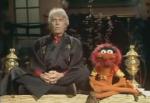
   Environmentalism and religion are indelibly linked. At times this connection is subtle, such as when it’s clothed in the often-bureaucratic language of sustainable development. Other times this marriage is openly acknowledged. The late actor James Coburn, in an Earth Day interview with Caryl Matrisciana at Malibu Beach, enthusiastically proclaimed,
james coburn

    “Mother Earth is the Mother. She’s the Mother Goddess. She’s the one we should be praising rather then raping.

   I mean, all of these people here today are here for one reason, because they are concerned about what’s happening to the Earth, what Mankind is doing to the Earth. I mean the negative emotion we carry around a lot of us is another contributor to it. It all feeds the Moon. What we have to do is be true to ourselves, if we are true to ourselves we’ll be true to Mother Earth.

Mother Earth is going to be bountiful. She’ll give us everything we need. She has for a long time.

We’ve lost our way. The pagans used to know how to do it. And the Indians, some of them still remember how to do it.

The Earth is a living organism. We’re killing the one we love the most, and she loves us. We’ve got to praise our Mother Goddess!”[2]


At the world’s political gathering place, the United Nations, eco-spirituality has been embraced in a variety of forms. One example is the UN Convention on Biological Diversity (CBD), a short document hardly amounting to twenty letter-sized pages. Taken at face value, the CBD appears benign in almost every respect, with little in the text that could be construed as religious-in-nature.

   Yet when the United Nations Environmental Programme (UNEP) interpreted the CBD, resulting in an oversized United_Nations_Environment_Programme1100+page work titled the Global Biodiversity Assessment, eco-spirituality was included as a global asset. In fact, eco-spirituality was deemed so important that a second massive volume was published, aptly titled Cultural and Spiritual Values of Biodiversity: A Complementary Contribution to the Global Biodiversity Assessment (700+pages on oversized paper).

   So why would the CBD, a minuscule document with no real reference to religion foster such a huge interpretive response, including one text specifically on the spiritual aspects of biodiversity? UNEP published the answer,

“…the UN has turned increasing amounts of time and energy to articulating practical measures for meeting the global environmental crisis and to forming an international consensus around a global environmental ethic. Much of this effort came to fruition at the 1992 Earth Summit through the passage of Agenda 21, the Rio Declaration, and the Convention on Biological Diversity [CBD].”[3]

   In case you missed it the answer is found in the middle of the above quote; the formation of “a global environmental ethic.”

   Elaborating on this point, J. Baird Callicott, a UNEP contributor and Professor of Philosophy in the Department of Religion Studies at the University of North Texas, writes in Cultural and Spiritual Values of Biodiversity,

“With the current and more ominous global dimension of the twentieth century’s environmental crisis now at the forefront of attention, environmental philosophy must strive to facilitate the emergence of a global environmental consciousness that spans national and cultural boundaries…In part, this requires a more sophisticated cross-cultural comparison of traditional and contemporary concepts of the nature of nature, human nature, and the relationship between people and nature…a new paradigm is emerging that will sooner or later replace the obsolete mechanical world-view and its associated values and technological esprit.

   What I envision for the twenty-first century is the emergence of an international environmental ethic based on the theory of evolution, ecology and the new physics…Thus we may have one world-view and one associated environmental ethic corresponding to the contemporary reality that we inhabit one planet…”[4]

According to The Concise Oxford Dictionary, the term “ethic” means “a set of moral principles.” Ethics, and its twin sister, Morality, historically turn on the hinges of religion and philosophical thought. Hence, if a new set of global ethics is to arise, religion as a whole – and spiritual leadership in particular – must be included in this transformative process. But which religions and spiritual practices are deemed valid in creating a new global, Earth-centric morality?

   By seeing which religions are vilified in the United Nation’s system, and by examining which worldview the UN deems important, the answer avails itself. A glimpse of this exists in the two aforementioned CBD interpretive texts. In these volumes Christianity is castigated, while pagan practices and Eastern religions are upheld as positive models.

   According to the Global Biodiversity Assessment,

“…the Judaeo-Christian tradition, set humans not as part of a wider community of beings, but apart. It came to view nature as totally dedicated to the fulfilment of human wants, at the pleasure of people. Eastern cultures with religious traditions such as Buddhism, Jainism and Hinduism did not depart as dramatically from the perspective of humans as members of a Hinduismcommunity of beings including other living and non-living elements. So Hindus continue to protect primates…Buddhist shrines in southeast Asia have temple groves attached to them, as do Shinto shrines in Japan. This does not at all mean, however, that these Asian societies have not permitted large-scale erosion of their biological diversity, whether in India or Thailand.

Societies dominated by Islam, and especially by Christianity, have gone farthest in setting humans apart from nature and in embracing a value system that has converted the world into a warehouse of commodities for human enjoyment. In the process, not only has nature lost its sacred qualities, but most animal species that that have a positive symbolic value in other human cultures have acquired very negative connotations in the European culture. Conversion to Christianity has meant an abandonment of an affinity with the natural world for many forest dwellers, peasants, fishers all over the world.”[5]

   After laying basic blame for environmental problems at the feet of Christianity, the Assessment continued its chastisement by giving the negative example of sacred grove destruction.

   “The northeastern hill states of India bordering China and Myanmar supported small scale, largely autonomous shifting cultivator societies until the 1950s. These people followed their own religious traditions which included setting apart between 10 and 30% of the landscape as sacred groves and ponds. Most of these people were drawn into the larger market economy and converted to Christianity by the late 1950s. On so converting to a religious belief system that rejects assignment of sacred qualities to elements of nature, they began to cut down the sacred groves…”[6]

   The second UNEP interpretive volume, Cultural and Spiritual Values of Biodiversity, takes an even more challenging approach to Christianity and Western positions. It proposes that world religions, “especially those in the West,” redefine their ultimate purpose to align with a more radical Earth view; suggesting that Western religions compare their cosmology with the Assisi Declarations,[7] which propagates world unity and universal harmony as the answer to Mankind’s globally destructive tendencies.[8]

   Moreover, the “Christian philosophy of the white man” is referred to as “the ego-driven hegemony of Christian doctrine.”[9] Instead of these negative “white man” philosophies, other more harmonious world-views are to be encouraged, such as the sacredness of the soil: “The soil is our Goddess; it is our religion.”[10]

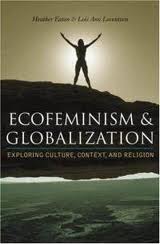
   Eco-feminism, antagonistic to Christianity and the image of “God as single, male and transcendent,”[11] is also brought to the forefront. The UNEP contributor on eco-feminism suggests a number of “interconnected transformations of our world-view.”

  1. “A shift from a conception of God as holding all sovereign power outside of and ruling over nature; to a conception MotherEarthof God who is under and around all things, sustaining and renewing nature and humanity together as one creational biotic community.”

  2. “A shift…to a view of the world as an organic living whole, manifesting energy, spirit, agency and creativity.”
  3. “A shift from an ethic that non-human entities on the earth, such as animals, plants, minerals, water, air and soil have only utilitarian use value…to a view of all things having intrinsic value to be respected and celebrated for their own being.”
  4. “A shift…to a holistic psychology that recognizes ourselves as psychospiritual-physical wholes in interrelation with the rest of nature as also psychospiritual-physical wholes who are to mutually interdepend in one community of life.”
  5. “A shift from a view that patriarchal dominance is the order of ‘nature’…to a recognition that patriarchal dominance is the root of distorted relations…”
  6. “A shift from the concept of one superior culture (white Western Christian) to be imposed on all other peoples to Eco-feminism‘save’ and civilize’ them; to a respect for the diversity of human cultures in dialogue and mutual learning, overcoming racist hierarchy and defending particularly the bioregional indigenous cultures which are on the verge of extinction.”
  7. “A shift from a politics of survival of the fittest that allocate resources and power to the most powerful; to a political community based on participatory democracy, community-based decision-making and representation of the welfare of the whole bio-region in making decisions.”[12]

Fitting with these alternative views, Cultural and Spiritual Values of Biodiversity presents the Gaia idea as a cornerstone paradigm. This “scientifically” favored hypothesis entwines various co-evolutionary and Mother Goddess concepts around a self-organizing Earth principle,[13] forming a united foundation to serve the call of planetary interdependence. Conversely, in reference to the Judeo-Christian order of nature as found in the first chapter of Genesis, the UNEP volume contends that “a culture built on ‘domination of the earth, and the animals therein’ is doomed to disappear.”

   So it’s no surprise to read,

  “…primitive religions and cultures, often conceived of as constituting one single and earliest form of religion, have constantly functioned as the positive or negative counterpart to Western civilization and life. In the period of environmentalism they have predominately functioned as positive, sometimes even paradisiacal, models for an ecologically sound world-view and society. The period of environmentalism coincides with a period of New Age thinking…”[14]

          Obviously the religious foundation for the coming global ethic, which is designed to save the planet from calamity, must be built on pagan/Eastern cosmologies. Christianity maligned – with its Western consumption and development patterns, it’s dominance over gender and nature, and its racially “superior” cultural mindset – must “disappear.”

   But “Christianity,” or a form of it, can have its place at the international table. In a metaphorical way a spot for it has been set, along with place mats for the other monotheistic faiths. However two unspoken, simple requirements first need to be met.

   First, abandon the fundamentalist aspects of the Biblical faith, rife with its talk of sin and salvation, and reject the exclusiveness of Jesus Christ – which separates and divides. And secondly, join the world in re-forging society so that the Brotherhood of Man and the Fatherhood of God prevails. In other words, turn your back on the narrow, foundational tenants of the Bible and partner to create a unified world, recognizing that all religions are valid expressions of the Living Cosmos. And it doesn’t really matter what order this is done in, as long as the end result of a new global ethics is attained.

   And to make sure that the place at the table is filled, assistance from the international community is available.

   For almost forty years UNEP has sponsored the World Environment Day (WED). Each June 5th, a host city sponsors the WED with a specific environmental theme. This year (2007) the host city was Tromsø, Norway, with the theme: “Melting Ice – A Hot Topic?”

World Environment Day (WED)

   Other themes have included, “Give Earth a Chance” (2002), “We the Peoples: United for the Global Environment” (1995), and “Only One Earth, Care and Share” (1992). Cities that have hosted the event include San Francisco (2005), Moscow (1998), and Nairobi (1987), among others (see the sidebar “World Environment Day: Hosts and Themes” at the end of this article).

   It’s in this context of the World Environment Day that the UN Environmental Sabbath was launched, specifically designed to fall on the weekend closest to the WED. As one writer for the Earth Island Institute noted, “The approach of World Environment Day also signals the return of another unique UN-conceived event – the Earth Sabbath – a day of worship that transcends denominations and welcomes all faiths to participate in a day of global reverence for the Earth.”[15]

      Leigh Eric Schmidt, writing for The Harvard Theological Review in 1991, provides some of the historical details of this unique, annual Earth worship event.

 “The first Earth Day in 1970 provided an occasion within the churches for expressing concerns over the environmental crisis. Religious involvement in this ecological awakening was substantial. Both the president and the general secretary of the National Council of Churches endorsed Earth Day in mailings to church leaders in March 1970; they also encouraged the observance of an Environmental Sabbath the weekend before…

   …Despite the call in 1970 for an Environmental Sabbath, the idea did not develop until the United Nations Environment Programme appropriated it in 1986, linking it with World Environment Day…Interreligious in its construction, the Environmental Sabbath is intended to be a time ‘to contemplate our bond with nature’ and to cultivate ‘a more caring, knowing and responsible attitude toward our use of Earth’s gifts.’ With an estimated ‘25,000 groups of celebrants’ in 1990 – in churches, synagogues, colleges, and youth organizations – the Environmental Sabbath is explicitly liturgical and religious in its inspiration (in contrast to the more politically oriented activities of Earth Day)…”[16]

   Although UNEP adopted the Sabbath in 1986, it wasn’t until the following year that the program went public. According to John J. Kirk, co-founder of the Interfaith Partnership for the Environment, an organization established by UNEP in to work on the Sabbath, the target audience was initially North American churches.

   “It began in the fall of 1986 when a few of us met at UN headquarters in New York with leaders of several faith communities. With guidance and support from the United Nations Environment Programme, we began developing a project that would inform North American congregations about the serious environmental problems facing life on Earth, so we could work to protect this magnificent work of the Creator.

   In June of 1987, our first Environmental Sabbath kit went to congregations across the United States and Canada. The goal was to create a sabbatical for our beleaguered planet – an Earth Rest Day to be celebrated annually by faith communities…”[17]

   Noel J. Brown, the UNEP Director during the 1990 Earth Sabbath, presents us with deeper reasons then just informing North American congregations. In a letter dated March 28, 1990, Brown wrote,

   “Once again, the United Nations Environmental Programme (UNEP) is pleased to invite you to join us in celebrating the ‘Environmental Sabbath/Earth Rest Day’ in your ceremonies, rituals and prayers…

   …The need for establishing a new spiritual and ethical basis for human activities on Earth has never been greater – as the deterioration of our Planetary Home makes the protection of the human environment a new global imperative.”[18]

   Less then six months before his letter went public, Brown was candidly seeking the complicity of religious leaders in his quest to create a new global ethic. Consider these statements made while the UNEP Director was visiting the Los Angeles Interfaith Council,

   “Now we need to work more closely with the religious and spiritual community. We need to create an ecumenical movement – I call it an ‘eco-menical’ movement – in the service of the Earth. It’s time for us to think again, and to think anew…

…We would also like to suggest other challenges that you in the religion and faith community might help us with. The first is a new vision, and supporting institutions, to help us move through this transition. We in the United Nations cannot hope to solve the problems of the future with only the institutions and the mentality of the past. We need a vision that encompasses all human rights to freedom, equality and conditions of life; and an environment that promises life, dignity and well-being. We need also a new legitimacy, a new ethic, and new metaphors.

…we must create a new vision and an institution that can help us to deal with these new realities.

   One of the new metaphors that I am eager to produce and promote is that of a covenant ­– a new covenant with the Earth. You in the religious communities can help us do that…

… That is the challenge facing all of us, and that is the challenge to which I ask you to work with us as allies. We can create a new order, and if we are to survive, indeed we must.”[19] [Italics in original]


At the time of the 1990 event, Christian denominations sitting on the Environmental Sabbath interfaith board included the American Baptist Church, the Protestant Episcopal Church, the United Methodist Church, and the United Church of Christ.[20] Moreover, a special Earth worship resource book was prepared by UNEP for the Sabbath, suitably titled Only One Earth.

   Focusing on changing the current religious paradigm towards a new ecological way of thinking, Only One Earth was a source book filled with meditative readings, prayers, and songs for congregational use. Even worship service suggestions were included, such as the excerpted recommendations listed below.

             The Sermon:

  • “Describe the crisis. Use scientific data. Highlight the urgency of the situation.”
  • “Speak of the essential earth-human relationship. What is it? What is our responsibility to it?”
  • “Point to various sources of inspiration: to scripture, to wisdom and spirituality; and to the Earth itself. Show how they are all important, and tied together.”

The Service:

smokeythebear

  • “Decorate your sanctuary with photographs of the Earth as seen from outer space, and with other Earth images.”
  • “Invite guest speakers or ‘representatives’ from other species, i.e. plants and animals.”

Go Further:

  • “In regular services, insert a portion that focuses on reverence and care for the Earth.”
  • “Organize an interfaith ceremony.”
  • “Organize an Environmental Sabbath concert or festival…”
  • “Write letters to the national and regional leaders of your faith, encouraging them to take action.”[21]

For religious leaders who were so inclined, churches could participate through a variety of listed meditations and reflections. Hindu, Buddhist, Judaic, North American Indian, Islamic, and Christian prayers were suggested; all with an Earth-centric and/or mystical tone. Topping it off, at the back of the UNEP Sabbath worship book was the Earth Covenant, a type of “citizens’ treaty” that could be copied and distributed to the worshipers (see “Earth Covenant” sidebar).

   The response to the Environmental Sabbath of 1990, the kick-off year of Only One Earth, was noteworthy. Not only did many churches and groups embark on this Earth-first journey, estimated at 25,000 by Leigh Eric Schmidt, it added real momentum towards acceptance of an environmental theology. And over the years, the program, according to John Kirk, has spawned “more than 130,000 religion and ecology projects…worldwide.”[22]

   Granted, the Environmental Sabbath never reached the tremendous general popularity held by the April 22nd Earth Day. But it wasn’t designed for the general public. Rather, the Environmental Sabbath program was target specific: religions and spiritual leaders, churches, and entire denominations.

   In the year 2000, Only One Earth was revamped and re-released as Only One Earth: A Book of Reflection for Action. On page 3 of this new and enlarged edition, UN Under-Secretary-General Klaus Töpfer offered some words of eco-wisdom,

“We have entered a new age. An age where all of us will have to sign a new compact with our environment…and enter into the larger community of all living beings. A new sense of our communion with planet Earth must enter our minds.”[23]

   Today, New Age eco-spirituality is sweeping through the Christian community, influencing para-church organizations, local congregations, and up into the leadership of entire denominations. If one where to catalogue the situation only in North America, it would take an entire book to list all the ministries and churches that have adopted this ideology either by naivety or by consent.

   Seeing the handwriting on the wall, Robert A. Sirico, president of the Acton Institute, penned these words regarding the Earth Sabbath, paganism, and the embracement of these ideas by religious leaders.

   “Consider the ‘confession’ of environmental sins offered by the National Council of Churches (NCC): ‘We are responsible for massive pollution of earth, water and sky…We are killing the skies: as the global atmosphere heats up from chemical gases, as the ozone layer is destroyed.’

Scientists say most of these concerns are overblown. But let’s just say these assertions are true. At most, they are technical matters to be addressed by specialists in the public or private sector. They shouldn’t have far-reaching spiritual relevance. No one is in Hell for using aerosol hairspray.

Only if we jettison traditional teachings can we agree with the words of NCC’s eco-celebrant, who says in one proposed prayer: ‘We must say, do, and be everything possible to realize the goal of the Environmental Sabbath…We cannot let our mother die. We must love and replenish her.’

Describing the earth as our living mother either constitutes a pagan form of earth worship or comes dangerously close. An ‘Environmental Sabbath’ isn’t a Christian goal, even though the United Nations has a program to promote it. Neither should we attempt to create an ‘Eco-Church’…

The Genesis account of creation provides enough theological evidence to counter the greening of theology. After God created man and woman in His image, He said: ‘Be fertile and multiply; fill the earth and subdue it. Have dominion over the fish and the sea, the birds of the air and all the living things that move on this earth’ (Gn 1:28).

The earth hasn’t been given dominion over people. We have souls which are in need of salvation; rocks, rivers, squirrels and salmon do not. We have been given the gifts of reason and revelation; plants and animals have not. There are right and wrong ways to have dominion over nature, which the well-formed conscience can discern.”[24]

   In closing this article, it would be wise to consider the words of Samantha Smith from her 1994 book Goddess Earth. A critic of eco-spirituality, she exposed the core of this issue and its disquieting implications for Christianity,

“Much of the social and environmental activism in the churches today is based on Socialist beliefs promoted in the name of ‘stewardship,’ which encompasses everything from social justice to passionate earth protection. Green theology overlooks God’s commands to fill the earth and subdue it, while caring for its beauty and resources. Instead, it would have Christians believe their noblest calling is to serve their ‘interconnected’ earth. In so doing, they play into the hands of the pagan Greens, who desire to have dominion over man.”[25] FC

earthday

Carl Teichrib edits Forcing Change, a monthly journal detailing the worldview changes now sweeping our Western culture, and the challenges and opportunities this presents to Christendom.
 

Related links are listed below:

  1. David Suzuki Foundation
  2. The New Christianity Pt. 12 – Alice Bailey & The Christian World Servers
  3. Evangelical Environmentalism
  4. Authors of Confusion Pt. 24 – Rick Warren & the ‘Seeker Sensitive, Purpose Driven, Emergent, World-Church’

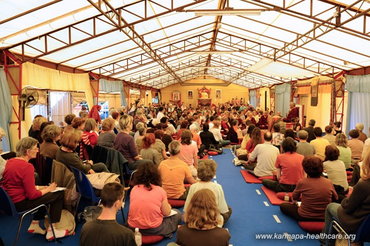
Abusive Lamas

Kagyu Ling

TheGuardian

‘The Dalai Lama has warned against being seduced into Tibetan Buddhism by its exotic tantric aura.

A senior monk at Kagyu Ling, a Tibetan Buddhist centre near Dijon in France, has become the first ordained lama in the developed world to be imprisoned. Lama Tempa Dargye is being held in provisional detention, following allegations of rape and sexual violence by four women. One woman alleged that she was aged nine when she was raped. French police have also launched an investigation into financial irregularities at the centre.

Kagyu Ling was founded in 1976 by the late Kalu Rinpoche, in response to a surge of interest in Tibetan Buddhism among western spiritual seekers. Kalu Rinpoche died in 1989. Within the last two years his reincarnation, the present Kalu Rinpoche, has assumed responsibility for the institutions set up by his predecessor. But during Kalu’s childhood the situation at Kagyu Ling allegedly deteriorated to the point where it no longer functioned as a Buddhist centre. The young Kalu sacked Lama Tempa and five other resident Bhutanese monks, replacing them with westerners and a “collegiate” system of control and responsibility.

Controversy over Kagyu Ling might then have died down – except for the fact that a woman known as Sandrine decided to tell her story of rape and sexual violence to the gendarmerie. At first she was a lone voice, but recently three more women decided to testify; Lama Tempa was arrested and the police investigation is ongoing.

The events at Kagyu Ling are currently making headlines in France, but Tibet-watchers worldwide are aware that many more scandals have surfaced since the lamas fled their homeland in the late 1950s, following the Chinese takeover of Tibet. Some examples: in America followers of the late Trungpa Rinpoche were horrified to learn that his appointed successor, the late Thomas Rich appeared to have infected several people with HIV.

In 1994 the high-profile lama Sogyal Rinpoche was sued in California for sexual assault by a woman known as Janice Doe. The suit was settled out of court with substantial damages paid to the plaintiff. Rumours about Sogyal’s sexual exploits have circulated on the internet ever since. In Canberra, Australia, a respected Tibetan guru called Lama Choedak was forced to make a public apology after multiple affairs with his female students came to light.

In the UK Michael Lyons, aka Mohan Singh, is serving 10 years in prison after being convicted of rape. He posed as a Tibetan lama, but had no authentic qualifications. The followers of an American, Geshe Michael Roach, ordained as a Tibetan monk, attracted media attention when one of them died in bizarre circumstances after being ejected from a three-year retreat at a remote mountain centre in Arizona. “Michael Roach teaches an extremely exaggerated, and from a Buddhist perspective somewhat dubious, form of tantrism,” says Lama Jampa Thaye, an Englishman from Manchester who has been teaching Tibetan Buddhism for more than 30 years.

The Shangri La factor is undoubtedly significant in the explosion of interest in Tibetan Buddhism around the world. The Dalai Lama’s Nobel prize and his saintly reputation is another. His Holiness has an impressive track record in favour of nonviolence and as a champion of human rights – and he has warned against being seduced into Tibetan Buddhism by its exotic tantric aura, with hints of arcane sexual practices. Although he has never named and shamed any individual lama, he has recently publicly acknowledged that “some tulkus have behaved badly”. He also cautions against rushing into commitment to a lama. “In Tibet”, he says, “it could take 12 years before a lama-disciple relationship was established.” He points out that it is a big responsibility and should not be undertaken lightly by either party.

So if you are attracted to Tibetan Buddhism, have read some books and learned some meditation techniques and now want to delve in deeper – how do you guard against being fooled by a charismatic charlatan? What criteria do you apply to your search for an authentic teacher? Lama Jampa Thaye’s advice reflects a commonsense approach:

“Although one may come across examples of authentic Buddhist masters who dress or speak unconventionally, there is no licence in Buddhism for unethical behaviour. Thus oriental or occidental masters who claim their selfish and abusive behaviour is a display of ‘skilful means’ or ‘crazy wisdom’ are to be given a wide berth – unless we want to jump over a cliff hand in hand with them.”

Church Of Scientology former Member Speaks Out about Cult

SCIENTOLOGY-LA_012

HuffingtonPost.Com

Former Scientologist Jenna Miscavige Hill joined HuffPost Live Thursday to share her personal story of growing up in the church and to explain how she escaped from it.

Hill, the niece of church leader David Miscavige and author of Beyond Belief, told HuffPost Live host Ahmed Shihab-Eldin about the oppressive practices of the church, which include forced abortion and abuse.

“If you do become pregnant when you’re there, you get kicked out,” she said. “Or many of my friends were actually Jenna Miscavige Hillcoerced into having abortions.”

Hill also described tales of forced labor and abusive teachers, and said she knew she had to leave the church after being exposed to the outside world on a mission trip abroad.

“When we went back to LA after that mission, it was like, everything was in plain view,” she said. “Back to fifteen minute meals, you can’t go to bed before 1:00 AM, you have to stay up all night even though you did yesterday…It put a lot of things in plain sight. There was no denying it. They started taking away your phones, your internet access…that was a big turning point for me.”

Watch the full segment at HuffPost Live.

Test All Things Pt. 5 – Cult Leaders & their Followers

cultleaders

The minds of most people have not been trained to think critically about the groups that they follow, so that they are able to discern whether their group is grounded in truth, or is ruled over by error. Also most people will not think to examine the legitimacy of their group. Instead, people are prone to blindly following what seems right, and what appeals to their senses. However, mankind has been sinners since the fall of Adam, and therefore their senses are corrupt. That is why Scripture says that “The heart is deceitful above all things, And desperately wicked”, and “the carnal mind is enmityihop against God; for it is not subject to the law of God, nor indeed can be”(Jeremiah 17:9, Romans 8:7). Therefore, what appeals to the senses of sinful man, and what seems right to them, cannot be trusted. Instead, whatever messenger, or message, that claims to be “the truth” must be tested by the word of God, so that people can know if what they are hearing, and learning, is true or error & deception.

Scripture is the only measuring rod for discerning truth from error. That is why Jesus, who is the Word of God, and “the Word made flesh”, said “I am the light of the world. He who follows Me shall not walk in darkness, but have the light of life”, and “I am the way, the truth, and the life”, and “Sanctify them by Your truth. Your word is truth”(John 8:12, John 14:6, John 17:17). The Apostle John also spoke of God, and the word, in this way: “God is light and in Him is no darkness at all” (1John 1:5). The word of God also says “The words of the LORD are pure words, Like silver tried in a furnace of earth, Purified seven times”, and “Every word of God is pure; He is a shield to those who put their trust in Him. Do not add to His words, Lest He rebuke you, and you be found a liar.” (Psalm 12:6, Proverbs 30:5-6). Therefore, Scripture affirms itself as true, without errors, and it is not open to additions, but it exposes those who add to the word of God as liars.

2Timothy 3

13    But evil men and impostors will grow worse and worse, deceiving and being deceived.
14    But you must continue in the things which you have learned and been assured of, knowing from whom you have learned them,
15    and that from childhood you have known the Holy Scriptures, which are able to make you wise for holy-biblesalvation through faith which is in Christ Jesus.
16    All Scripture is given by inspiration of God, and is profitable for doctrine, for reproof, for correction, for instruction in righteousness,
17    that the man of God may be complete, thoroughly equipped for every good work.

People who follow cults, and cult leaders, are not following the true God, but a counterfeit God. The cult leaders may claim to be Christians, and the cults may claim to be Christ’ church, but they deviate from the gospel of Jesus Christ, and require their followers to trust their interpretation of the gospel.

Some cults are more deceptive then others. Some are so extremely heretical that they are easy to fall away from. Nevertheless, people’s departure from particular cults is just the beginning of breaking away from error, because there are many cults that claim to be Christian churches. So people must be willing to examine the doctrine of every church that they attend. It is not sufficient to merely identify the heresies within other churches. Any hypocrite can do that Bill-Johnson-200x200(Matthew 7:3-5). Jesus revealed the importance of abstaining from error when he said “Enter by the narrow gate; for wide is the gate and broad is the way that leads to destruction, and there are many who go in by it. Because narrow is the gate and difficult is the way which leads to life, and there are few who find it” (Matthew 7:13-14). Therefore, leaving a cult, and deciding to attend a church that seems better simply isn’t good enough. Those “who names the name of Christ must depart from iniquity”, because there are many false teachers, who are teaching people to follow heresies that contradicts the gospel, which is a work of the flesh, which will prevent many from inheriting the kingdom of God (2Timothy 2:19, Galatians 5:19-21). That is why Jesus said “Beware of false prophets, who come to you in sheep’s clothing, but inwardly they are ravenous wolves” (Matthew 7:15). In order to escape the trap of damnable heresies, believers must test their own church to make sure that it is a church that teaches, and obeys, the true gospel. There is no perfect church, but a true church teaches the true gospel, and obeys it (Matthew 5:13-16, John 8:12, Ephesians 4:1-16, Galatians 1:6-8, Galatians 5:4-9).

Whenever believers join churches that teaches the true gospel, and obeys it, the believes must also test themselves to make sure that they are following Christ, and not merely his people, nor pastors, nor their favorite teachers, because Jesus commanded every believer to follow him. He also gave this warning: “I am the true vine, and My Father is the vinedresser. Every branch in Me that does not bear fruit He takes away; and every branch that bears fruit He prunes, that it may bear more fruit” (John 15:1-2). He also said “I am the vine, you are the branches. He who abides in Me, and I in him, bears much fruit; for without Me you can do nothing. If anyone does not abide in Me, he is cast out as a branch and is withered; and they gather them and throw them into the fire, and they are burned” (John 15:5-6). This means that those who are claiming to be believers, yet are not following Christ’s teachings, will be taken out of the congregation of the righteous, and burned by the wrath of God (Psalm 1:-6, Psalm 119:1-11, Hebrews 6:1-8).

Hebrews 6

1    Therefore, leaving the discussion of the elementary principles of Christ, let us go on to perfection, not laying again the foundation of repentance from dead works and of faith toward God,
2    of the doctrine of baptisms, of laying on of hands, of resurrection of the dead, and of eternal judgment.
3    And this we will do if God permits.
4    For it is impossible for those who were once enlightened, and have tasted the heavenly gift, and have become partakers of the Holy Spirit,
5    and have tasted the good word of God and the powers of the age to come,
6    if they fall away, to renew them again to repentance, since they crucify again for themselves the Son of God, and put Him to an open shame.
7    For the earth which drinks in the rain that often comes upon it, and bears herbs useful for those by whom it is cultivated, receives blessing from God;
8    but if it bears thorns and briers, it is rejected and near to being cursed, whose end is to be burned.

This is the reason why many Christians will not inherit the kingdom of God. They do not endure to the end. They may be in the congregation of the righteous, and mimic the behavior of believers, and even expose the heresies of false churches, yet they, themselves, are not following Christ. They are merely indoctrinated into church culture. Though it may be a true church, God’s word has not taken root in their own hearts. They are merely following their group, or their pastor, and when their group falls into damnable heresies, they might also follow without protest. These kind of people are members of true Christian churches, yet they follow their church just as any other cult member.

There are also many professing Christians who follow their favorite teachers, whether they be local pastors, or televangelists. These are personality cults. Many of these cults are international. The danger with these type of cults isn’t merely the doctrine. The doctrine could be true, yet the cult aspect will still lead many to Hell, because the people are not following Christ, but a mere human celebrity. This cult is extremely dangerous, because it seems safe to the human senses, but it is idolatry. Idolatry is a work of the flesh, and those who practice it will not inherit the kingdom of God (Galatians 5:20-21). The way to eternal life is narrow, and difficult. (Matthew 7:14). Therefore, every believer must test themselves to see if they are really in the faith, and not following, and worshiping, idols, because it does not matter if a preacher that they are idolizing is preaching the true gospel. If Christians are following an orthodox preacher, rather than Christ, then that believer will go to Hell for their idolatry.

Believers, therefore, do not need to be pointed to great preachers, but Christ, himself. He is the true God, and abiding in him will lead to eternal life. Preachers do not need to be exalted, but Jesus said “if I am lifted up from the earth, [I] will draw all peoples to Myself” (John 12:32).

1Corinthians 1

10    Now I plead with you, brethren, by the name of our Lord Jesus Christ, that you all speak the same thing, and that there be no divisions among you, but that you be perfectly joined together in the same mind and in the same judgment.
11    For it has been declared to me concerning you, my brethren, by those of Chloe’s household, that there are contentions among you.
12    Now I say this, that each of you says, “I am of Paul,” or “I am of Apollos,” or “I am of Cephas,” or “I am of Christ.”
13    Is Christ divided? Was Paul crucified for you? Or were you baptized in the name of Paul?

1Corinthians 3

5    Who then is Paul, and who is Apollos, but ministers through whom you believed, as the Lord gave to each one?
6    I planted, Apollos watered, but God gave the increase.
7    So then neither he who plants is anything, nor he who waters, but God who gives the increase.
8    Now he who plants and he who waters are one, and each one will receive his own reward according to his own labor.
9    For we are God’s fellow workers; you are God’s field, you are God’s building.

Matthew 23

8    But you, do not be called ‘Rabbi’; for One is your Teacher, the Christ, and you are all brethren.
9    Do not call anyone on earth your father; for One is your Father, He who is in heaven.
10    And do not be called teachers; for One is your Teacher, the Christ.
11    But he who is greatest among you shall be your servant.

Luke 14

26    “If anyone comes to Me and does not hate his father and mother, wife and children, brothers and sisters, yes, and his own life also, he cannot be My disciple.
27    And whoever does not bear his cross and come after Me cannot be My disciple.

John 15

3    You are already clean because of the word which I have spoken to you.
4    Abide in Me, and I in you. As the branch cannot bear fruit of itself, unless it abides in the vine, neither can you, unless you abide in Me.
5    “I am the vine, you are the branches. He who abides in Me, and I in him, bears much fruit; for without Me you can do nothing.
6    If anyone does not abide in Me, he is cast out as a branch and is withered; and they gather them and throw them into the fire, and they are burned.

1John 2

24    Therefore let that abide in you which you heard from the beginning. If what you heard from the beginning abides in you, you also will abide in the Son and in the Father.
25    And this is the promise that He has promised us — eternal life.
26    These things I have written to you concerning those who try to deceive you.
27    But the anointing which you have received from Him abides in you, and you do not need that anyone teach you; but as the same anointing teaches you concerning all things, and is true, and is not a lie, and just as it has taught you, you will abide in Him.
28    And now, little children, abide in Him, that when He appears, we may have confidence and not be ashamed before Him at His coming.
29    If you know that He is righteous, you know that everyone who practices righteousness is born of Him.

2 Timothy 2

19 Nevertheless the solid foundation of God stands, having this seal: “The Lord knows those who are His,” and, “Let everyone who names the name of Christ depart from iniquity.”

1John 5

18    We know that whoever is born of God does not sin; but he who has been born of God keeps himself, and the wicked one does not touch him.
19    We know that we are of God, and the whole world lies under the sway of the wicked one.
20    And we know that the Son of God has come and has given us an understanding, that we may know Him who is true; and we are in Him who is true, in His Son Jesus Christ. This is the true God and eternal life.
21    Little children, keep yourselves from idols. Amen.

Radical Takeover Pt. 4 – Rome’s Crusade of Genocide in Rwanda

rwanda_skulls

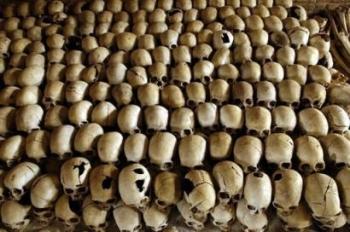
Below is a documentary entitled “In the Name of God”. The film is about Rome’s crusade in Rwanda, which started with Rome’s priests teaching Catholicism to the Tutsis, who were the elite tribe in Rwanda. Rome then made the Tutsis the ruling class of the country. The Tutsis ruled according to the authority, and dictates of Rome’s priests, and bishops.  In this way, Catholicism ruled over the country, until the Tutsis tribe liberated themselves from the rule of the Catholic Religion so that they could govern themselves. Rome’s retaliation toward the Tutsis’ rebellion was to convert the Hutus, which were oppressed by the Tutsis, and taught them to commit holy war against the Tutsis by killing everyone in the tribe; men women, and children, and to reestablish Roman Catholic rule over Rwanda; thus making the Hutus the ruling class.  This crusade was led by Rome’s bishops, priests, and nuns, and killed more than 800,000 Tutsis over a 3 month period, in which the U.S, and the U.N., did nothing to stop it.

To learn more about this well documented case of genocide by the hands of Rome, click on the links entitled “Innocent Blood“, and “Genocide of the Tutsis – the Role of the Roman Catholic Church“.

The Guardian

Martin Kimani is deputy director of the Ansari Africa centre at the Atlantic council in Washington DC and associate fellow at the conflict, security and development group at King’s College London. He is presently working on a book on religious belief and genocide in Rwanda

The Guardian

For Rwandans, the pope’s apology must be unbearable

If you are an Irish Catholic, and have suffered sexual abuse at the hands of a priest, you were recently read a letter from Pope Benedict that tells you: “You have suffered grievously and I am truly sorry. I know that nothing can undo the wrong you have endured. Your trust has been betrayed and your dignity has been violated.”

For any practising Catholic in Rwanda, this letter must be unbearable. For it tells you how little you mean toMartin Kimani the Vatican. Fifteen years ago, tens of thousands of Catholics were hacked to death inside churches. Sometimes priests and nuns led the slaughter. Sometimes they did nothing while it progressed. The incidents were not isolated. Nyamata, Ntarama, Nyarubuye, Cyahinda, Nyange, and Saint Famille were just a few of the churches that were sites of massacres.

To you, Catholic survivor of genocide in Rwanda, the Vatican says that those priests, those bishops, those nuns, those archbishops who planned and killed were not acting under the instruction of the church. But moral responsibility changes dramatically if you are a European or US Catholic. To the priests of the Irish church who abused children, the pope has this to say: “You must answer for it before almighty God and before properly constituted tribunals. You have forfeited the esteem of the people of Ireland and brought shame and dishonour upon your confreres.”

The losses of Rwanda had received no such consideration. Some of the nuns and priests who have been convicted by Belgian courts and the International Criminal Tribunal for Rwanda, respectively, enjoyed refuge in Catholic churches in Europe while on the run from prosecutors. One such is Father Athanase Seromba, who led the Nyange parish massacre and was sentenced to 15 years in jail by the tribunal. In April 1994, Seromba helped lure over 2,000 desperate men, women and children to his church, where they expected safety. But their shepherd turned out to be their hunter.

One evening Seromba entered the church and carried away the chalices of communion and other clerical vestments. When a refugee begged that they be left the Eucharist to enable them to at least hold a (final) mass, the priest refused and told them that the building was no longer a church. A witness at the ICTR trial remembered an exchange in which the priest’s mindset was revealed.

One of the refugees asked: “Father, can’t you pray for us?” Seromba replied: “Is the God of the Tutsis still alive?” Later, he would order a bulldozer to push down the church walls on those inside and then urge militias to invade the building and finish off the survivors.

At his trial, Seromba said: “A priest I am and a priest I will remain.” This, apparently, is the truth, since the Vatican has never taken back its statements defending him before his conviction.

In the last century, Catholic bishops have been deeply mired in Rwandan politics with the full knowledge of the Vatican. Take Archbishop Vincent Nsengiyumva. Until 1990, he had served as the chairman of the rwanda1ruling party’s central committee for almost 15 years, championing the authoritarian government of Juvenal Habyarimana, which orchestrated the murder of almost a million people. Or Archbishop André Perraudin, the most senior representative of Rome in 1950s Rwanda. It was with his collusion and mentorship that the hateful, racist ideology known as Hutu Power was launched – often by priests and seminarians in good standing with the church. One such was Rwanda’s first president, Grégoire Kayibanda, a private secretary and protege of Perraudin, whose political power was unrivalled.

The support for Hutu Power was therefore not unknowing or naive. It was a strategy to maintain the church’s powerful political position in a decolonising Rwanda. The violence of the 1960s led inexorably to the 1994 attempt to exterminate Tutsis. These were violent expressions of a political sphere dominated by contentions that Hutu and Tutsi were separate and opposed racial categories. This, too, is one of the legacies of the Catholic missionary, whose schools and pulpits for decades kept up a drumbeat of false race theories.

This turning away from the Rwandan victims of genocide comes at a time when the Catholic church is increasingly peopled by black and brown believers. It is difficult not to conclude the church’s upper reaches are desperately holding on to a fast-vanishing racial patrimony.

Perhaps it is time Catholics forced the leaders of their church to deal with a history of institutional racism that endures, if the church is truly to live up to its fine words. Apologies are not sufficient, no matter how abject. What is demanded is an acknowledgment of the church’s political power and moral culpability, with all the material and legal implications that come with it.

The silence of the Vatican is contempt. Its failure to fully examine its central place in Rwandan genocide can only mean that it is fully aware that it will not be threatened if it buries its head in the sand. While it knows if it ignores the sexual abuse of European parishioners it will not survive the next few years, it can let those African bodies remain buried, dehumanised and unexamined.

This is a good political strategy. And a moral position whose duplicity and evil has been witnessed and documented. For, it turns out, many people, scholars, governments and institutions inside and outside Rwanda are excavating their own roles in the genocide. The Vatican stands as an exception, its moral place now even lower than that of the government of France for its enduring friendship with genocidaires.

Zechariah 11

15    And the LORD said to me, “Next, take for yourself the implements of a foolish shepherd.
16    For indeed I will raise up a shepherd in the land who will not care for those who are cut off, nor seek the young, nor heal those that are broken, nor feed those that still stand. But he will eat the flesh of the fat and tear their hooves in pieces.
17     ” Woe to the worthless shepherd, Who leaves the flock! A sword shall be against his arm And against his right eye; His arm shall completely wither, And his right eye shall be totally blinded.”

Related articles are listed below:

  1. Radical Takerover Pt. 3 – Rome’s Extreme Liberal Stance on Gun Control
  2. Little Horn Pt. 1
  3. Little Horn Pt. 2

Radical Takeover Pt. 3 – Rome’s Extreme Liberal Stance on Gun Control

Pope-620x395

Rome presents itself to the world as representing the views of conservatives, yet there is an extreme liberal side to Rome that should be noted. One extreme liberal view of Rome is its stance on gun control, as stated below.

TheBlaze.Com

VATICAN CITY (AP) — The Vatican praised President Barack Obama’s proposals for curbing gun violence, saying they are a “step in the right direction.”

The Vatican’s chief spokesman the Rev. Federico Lombardi, said Saturday that 47 religious leaders have appealed to members of the U.S. Congress “to limit firearms that are making society pay an unacceptable price in terms of massacres and senseless deaths.”

“I am with them,” Lombardi said, in an editorial carried on Vatican Radio, lining up the Vatican’s moral Rev. Federico Lombardisupport in favor of firearm limits.

`’The initiatives announced by the American administration for limiting and controlling the spread and use of weapons are certainly a step in the right direction,” Lombardi said.

Lombardi renewed Vatican appeals for disarmament and encouragement for measures to fight “the production, commerce and contraband of all types of arms,” an industry fueled by `’enormous economic and power interests.”

Continue Reading…

USCatholic.Org

VATICAN CITY (CNS) — The Catholic Church’s position on gun control is not easy to find; there are dozens of speeches and talks and a few documents that call for much tighter regulation of the global arms trade, but what about private gun ownership?

The answer is resoundingly clear: Firearms in the hands of civilians should be strictly limited and eventually completely eliminated.

But you won’t find that statement in a headline or a document subheading. It’s almost hidden in a footnote in a document on crime by the U.S. bishops’ conference and it’s mentioned in passing in dozens of official Vatican texts on the global arms trade.

The most direct statement comes in the bishops’ “Responsibility, Rehabilitation and Restoration: A Catholic Perspective on Crime and Criminal Justice” from November 2000.

“As bishops, we support measures that control the sale and use of firearms and make them safer — especially efforts that prevent their unsupervised use by children or anyone other than the owner — and we reiterate our call for sensible regulation of handguns.”

That’s followed by a footnote that states: “However, we believe that in the long run and with few exceptions — i.e. police officers, military use — handguns should be eliminated from our society.”

That in turn reiterates a line in the bishops’ 1990 pastoral statement on substance abuse, which called “for effective and courageous action to control handguns, leading to their eventual elimination from our society.”

On the world stage, the Vatican has been pushing for decades for limitations not just on conventional weapons of warfare, such as tanks and missiles, but also for stricter limitations on the illegal and legal sale, trade and use of small firearms and weapons, said Tommaso Di Ruzza, the expert on disarmament and arms Tommaso Di Ruzzacontrol at the Pontifical Council for Justice and Peace.

Di Ruzza told Catholic News Service that the Vatican is one of just a handful of states that would like to see small arms and weapons included in the U.N. Arms Trade Treaty, which would better regulate the flow of conventional arms.

He said while many countries are open to limits on larger weapons systems, most nations aren’t interested in regulating small arms even though they “cause more deaths than all other arms (conventional and non-conventional) together.”

The Vatican’s justice and peace council is working to update its 1994 document, “The International Arms Trade,” to further emphasize the importance of enacting concrete controls on handguns and light weapons, he said.

The current document calls on every nation and state “to impose a strict control on the sale of handguns and small arms. Limiting the purchase of such arms would certainly not infringe on the rights of anyone.”

The more weapons there are in circulation, the more likely terrorists and criminals will get their hands on them, the document said.

The Catholic Church recognizes that “states will need to be armed for reason of legitimate defense,” as Pope Benedict XVI said in a message to a Vatican-sponsored disarmament conference in April 2008.

However, armed defense is something appropriate for nations, not for all individual citizens in a state where rule of law is effective, said Di Ruzza.

According to the Catechism of the Catholic Church, individuals have a right and a duty to protect their own lives when in danger, and someone who “defends his life is not guilty of murder even if he is forced to deal his aggressor a lethal blow.”

How that “lethal blow” could be licitly wielded is unclear, but the catechism clarifies that repelling the aggressor must be done “with moderation” in order to be “lawful” in the eyes of the church; using “more than necessary violence” would be unlawful, it says.

According to the catechism, the right to use firearms to “repel aggressors” or render them harmless is specifically sanctioned for “those who legitimately hold authority” and have been given the duty of protecting the community.

Di Ruzza said that in “a democracy, where there is respect for institutions (of law), the citizen relinquishes his right to revenge onto the state,” which, through its law enforcement and courts system, aims to mete out a fair and just punishment.

“There is a sort of natural right to defend the common interest and the common good, and in 1791 (when the United States passed the Second Amendment), my right to have a weapon served the common good because there wasn’t an army; the democratic institutions were young and a little fragile, and I could have been useful in a time of war as a soldier,” said Di Ruzza.

But once a nation has a functioning army, police force and court system, “do I still serve the common good with my gun or do I put it at even greater danger?” and promote a lawless kind of “street justice where if you steal my car, I shoot you,” he asked.

The Vatican’s justice and peace council’s 1994 document said, “In a world marked by evil and sin, the right of legitimate defense by armed means exists,” but, Di Ruzza said, it wasn’t lauding the potential of weaponry as much as it was lamenting the existence of arms in an imperfect world.

Nations have a duty, the document said, to reduce if not eliminate the causes of violence.

And as Pope Benedict wrote in his message to the disarmament conference, no reduction or elimination of arms can happen without eliminating violence at its root.

Every person “is called to disarm his own heart and be a peacemaker everywhere,” the pope said.


AmericaMagazine.Org

Why Gun Control is a Religious Issue by James Martin, SJ

These shootings would not have happened if the shooter did not have such easy access to firearms and ammunition.  So religious people need to be invited to meditate on the connection between the more traditional “life issues” and the overdue need for stricter gun control.  The oft-cited argument, “Guns don’t kill people, people do,” seems unconvincing.  Of course people kill people; as people also procure abortions,martin_j_1 decide on euthanasia and administer the death penalty.  Human beings are agents in all these matters.  The question is not so much how lives are ended, but how to make it more difficult to end lives.

Pro-life religious people need to consider how it might be made more difficult for people to procure weapons that are not designed for sport or hunting or self-defense.  Why would anyone be opposed to firmer gun control, or, to put it more plainly, laws that would make it more difficult for mass murders to occur?  If one protests against abortions clinics because they facilitate the taking of human life, why not protest against largely unregulated suppliers of firearms because they facilitate the taking of human life as well?

This stance will most likely be unpopular politically.  Some on the political right will object my stance on firmer gun control.  Some of the political left will object to my stance on abortion.  But that doesn’t bother me, because I am not political.  I am religious.  And so I am for the sanctity of life.  Therefore, I am for stricter gun-control laws that will protect lives, not end them.

Continue Reading…