The Cannibal Warlords of Liberia

Cannibal Warlords of Liberia

Vice

VICE travels to West Africa to rummage through the messy remains of a country ravaged by 14 years of civil war. Despite the United Nation’s eventual intervention, most of Liberia’s young people continue to live in abject poverty, surrounded by filth, drug addiction, and teenage prostitution. The former child soldiers who were forced into war have been left to fend for themselves, the murderous warlords who once led them in cannibalistic rampages have taken up as so-called community leaders, and new militias are lying in wait for the opportunity to reclaim their country from a government they rightly mistrust.

Hosted by Shane Smith | Originally released in 2009

To watch the documentary click on the link entitled “The Cannibal Warlords of Liberia“.

Related Articles are listed below:

  1. Liberia
  2. The UN Mission in Liberia
  3. Liberia: We Demand Coordination in Gov’t

Radical Takeover Pt. 7 – Cult of Green: UNEP’s Sabbath & Global Ethic

Earth-Worship1-1024x819

Worldview Weekend

Cult of Green:

The United Nations Environmental Sabbath and

the New Global Ethic

By Carl Teichrib (www.forcingchange.org)

 NOTE: This essay was first published in Forcing Change back in 2007. It is being reprinted here as an informational/educational service. If you appreciate the depth of research and scope of this essay, please consider an annual subscription/membership to Forcing Change – for your subscription support is what enables this research to continue. Go to Apply For Membership and check out the many options available. As a member you will receive each monthly edition of Forcing Change and have access to six years of back issues and reports.

————————-

 “Christianity rescued the world from this lunacy. Today, Christian Churches may be in need of rescue.” – Robert A. Sirico.[1]

   Environmentalism and religion are indelibly linked. At times this connection is subtle, such as when it’s clothed in the often-bureaucratic language of sustainable development. Other times this marriage is openly acknowledged. The late actor James Coburn, in an Earth Day interview with Caryl Matrisciana at Malibu Beach, enthusiastically proclaimed,

james coburn

    “Mother Earth is the Mother. She’s the Mother Goddess. She’s the one we should be praising rather then raping.

   I mean, all of these people here today are here for one reason, because they are concerned about what’s happening to the Earth, what Mankind is doing to the Earth. I mean the negative emotion we carry around a lot of us is another contributor to it. It all feeds the Moon. What we have to do is be true to ourselves, if we are true to ourselves we’ll be true to Mother Earth.

Mother Earth is going to be bountiful. She’ll give us everything we need. She has for a long time.

We’ve lost our way. The pagans used to know how to do it. And the Indians, some of them still remember how to do it.

The Earth is a living organism. We’re killing the one we love the most, and she loves us. We’ve got to praise our Mother Goddess!”[2]


At the world’s political gathering place, the United Nations, eco-spirituality has been embraced in a variety of forms. One example is the UN Convention on Biological Diversity (CBD), a short document hardly amounting to twenty letter-sized pages. Taken at face value, the CBD appears benign in almost every respect, with little in the text that could be construed as religious-in-nature.

   Yet when the United Nations Environmental Programme (UNEP) interpreted the CBD, resulting in an oversized United_Nations_Environment_Programme1100+page work titled the Global Biodiversity Assessment, eco-spirituality was included as a global asset. In fact, eco-spirituality was deemed so important that a second massive volume was published, aptly titled Cultural and Spiritual Values of Biodiversity: A Complementary Contribution to the Global Biodiversity Assessment (700+pages on oversized paper).

   So why would the CBD, a minuscule document with no real reference to religion foster such a huge interpretive response, including one text specifically on the spiritual aspects of biodiversity? UNEP published the answer,

“…the UN has turned increasing amounts of time and energy to articulating practical measures for meeting the global environmental crisis and to forming an international consensus around a global environmental ethic. Much of this effort came to fruition at the 1992 Earth Summit through the passage of Agenda 21, the Rio Declaration, and the Convention on Biological Diversity [CBD].”[3]

   In case you missed it the answer is found in the middle of the above quote; the formation of “a global environmental ethic.”

   Elaborating on this point, J. Baird Callicott, a UNEP contributor and Professor of Philosophy in the Department of Religion Studies at the University of North Texas, writes in Cultural and Spiritual Values of Biodiversity,

“With the current and more ominous global dimension of the twentieth century’s environmental crisis now at the forefront of attention, environmental philosophy must strive to facilitate the emergence of a global environmental consciousness that spans national and cultural boundaries…In part, this requires a more sophisticated cross-cultural comparison of traditional and contemporary concepts of the nature of nature, human nature, and the relationship between people and nature…a new paradigm is emerging that will sooner or later replace the obsolete mechanical world-view and its associated values and technological esprit.

   What I envision for the twenty-first century is the emergence of an international environmental ethic based on the theory of evolution, ecology and the new physics…Thus we may have one world-view and one associated environmental ethic corresponding to the contemporary reality that we inhabit one planet…”[4]

According to The Concise Oxford Dictionary, the term “ethic” means “a set of moral principles.” Ethics, and its twin sister, Morality, historically turn on the hinges of religion and philosophical thought. Hence, if a new set of global ethics is to arise, religion as a whole – and spiritual leadership in particular – must be included in this transformative process. But which religions and spiritual practices are deemed valid in creating a new global, Earth-centric morality?

   By seeing which religions are vilified in the United Nation’s system, and by examining which worldview the UN deems important, the answer avails itself. A glimpse of this exists in the two aforementioned CBD interpretive texts. In these volumes Christianity is castigated, while pagan practices and Eastern religions are upheld as positive models.

   According to the Global Biodiversity Assessment,

“…the Judaeo-Christian tradition, set humans not as part of a wider community of beings, but apart. It came to view nature as totally dedicated to the fulfilment of human wants, at the pleasure of people. Eastern cultures with religious traditions such as Buddhism, Jainism and Hinduism did not depart as dramatically from the perspective of humans as members of a Hinduismcommunity of beings including other living and non-living elements. So Hindus continue to protect primates…Buddhist shrines in southeast Asia have temple groves attached to them, as do Shinto shrines in Japan. This does not at all mean, however, that these Asian societies have not permitted large-scale erosion of their biological diversity, whether in India or Thailand.

Societies dominated by Islam, and especially by Christianity, have gone farthest in setting humans apart from nature and in embracing a value system that has converted the world into a warehouse of commodities for human enjoyment. In the process, not only has nature lost its sacred qualities, but most animal species that that have a positive symbolic value in other human cultures have acquired very negative connotations in the European culture. Conversion to Christianity has meant an abandonment of an affinity with the natural world for many forest dwellers, peasants, fishers all over the world.”[5]

   After laying basic blame for environmental problems at the feet of Christianity, the Assessment continued its chastisement by giving the negative example of sacred grove destruction.

   “The northeastern hill states of India bordering China and Myanmar supported small scale, largely autonomous shifting cultivator societies until the 1950s. These people followed their own religious traditions which included setting apart between 10 and 30% of the landscape as sacred groves and ponds. Most of these people were drawn into the larger market economy and converted to Christianity by the late 1950s. On so converting to a religious belief system that rejects assignment of sacred qualities to elements of nature, they began to cut down the sacred groves…”[6]

   The second UNEP interpretive volume, Cultural and Spiritual Values of Biodiversity, takes an even more challenging approach to Christianity and Western positions. It proposes that world religions, “especially those in the West,” redefine their ultimate purpose to align with a more radical Earth view; suggesting that Western religions compare their cosmology with the Assisi Declarations,[7] which propagates world unity and universal harmony as the answer to Mankind’s globally destructive tendencies.[8]

   Moreover, the “Christian philosophy of the white man” is referred to as “the ego-driven hegemony of Christian doctrine.”[9] Instead of these negative “white man” philosophies, other more harmonious world-views are to be encouraged, such as the sacredness of the soil: “The soil is our Goddess; it is our religion.”[10]

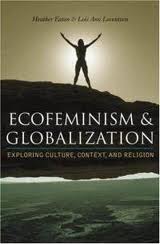
   Eco-feminism, antagonistic to Christianity and the image of “God as single, male and transcendent,”[11] is also brought to the forefront. The UNEP contributor on eco-feminism suggests a number of “interconnected transformations of our world-view.”

  1. “A shift from a conception of God as holding all sovereign power outside of and ruling over nature; to a conception MotherEarthof God who is under and around all things, sustaining and renewing nature and humanity together as one creational biotic community.”

  2. “A shift…to a view of the world as an organic living whole, manifesting energy, spirit, agency and creativity.”
  3. “A shift from an ethic that non-human entities on the earth, such as animals, plants, minerals, water, air and soil have only utilitarian use value…to a view of all things having intrinsic value to be respected and celebrated for their own being.”
  4. “A shift…to a holistic psychology that recognizes ourselves as psychospiritual-physical wholes in interrelation with the rest of nature as also psychospiritual-physical wholes who are to mutually interdepend in one community of life.”
  5. “A shift from a view that patriarchal dominance is the order of ‘nature’…to a recognition that patriarchal dominance is the root of distorted relations…”
  6. “A shift from the concept of one superior culture (white Western Christian) to be imposed on all other peoples to Eco-feminism‘save’ and civilize’ them; to a respect for the diversity of human cultures in dialogue and mutual learning, overcoming racist hierarchy and defending particularly the bioregional indigenous cultures which are on the verge of extinction.”
  7. “A shift from a politics of survival of the fittest that allocate resources and power to the most powerful; to a political community based on participatory democracy, community-based decision-making and representation of the welfare of the whole bio-region in making decisions.”[12]

Fitting with these alternative views, Cultural and Spiritual Values of Biodiversity presents the Gaia idea as a cornerstone paradigm. This “scientifically” favored hypothesis entwines various co-evolutionary and Mother Goddess concepts around a self-organizing Earth principle,[13] forming a united foundation to serve the call of planetary interdependence. Conversely, in reference to the Judeo-Christian order of nature as found in the first chapter of Genesis, the UNEP volume contends that “a culture built on ‘domination of the earth, and the animals therein’ is doomed to disappear.”

   So it’s no surprise to read,

  “…primitive religions and cultures, often conceived of as constituting one single and earliest form of religion, have constantly functioned as the positive or negative counterpart to Western civilization and life. In the period of environmentalism they have predominately functioned as positive, sometimes even paradisiacal, models for an ecologically sound world-view and society. The period of environmentalism coincides with a period of New Age thinking…”[14]

          Obviously the religious foundation for the coming global ethic, which is designed to save the planet from calamity, must be built on pagan/Eastern cosmologies. Christianity maligned – with its Western consumption and development patterns, it’s dominance over gender and nature, and its racially “superior” cultural mindset – must “disappear.”

   But “Christianity,” or a form of it, can have its place at the international table. In a metaphorical way a spot for it has been set, along with place mats for the other monotheistic faiths. However two unspoken, simple requirements first need to be met.

   First, abandon the fundamentalist aspects of the Biblical faith, rife with its talk of sin and salvation, and reject the exclusiveness of Jesus Christ – which separates and divides. And secondly, join the world in re-forging society so that the Brotherhood of Man and the Fatherhood of God prevails. In other words, turn your back on the narrow, foundational tenants of the Bible and partner to create a unified world, recognizing that all religions are valid expressions of the Living Cosmos. And it doesn’t really matter what order this is done in, as long as the end result of a new global ethics is attained.

   And to make sure that the place at the table is filled, assistance from the international community is available.

   For almost forty years UNEP has sponsored the World Environment Day (WED). Each June 5th, a host city sponsors the WED with a specific environmental theme. This year (2007) the host city was Tromsø, Norway, with the theme: “Melting Ice – A Hot Topic?”

World Environment Day (WED)

   Other themes have included, “Give Earth a Chance” (2002), “We the Peoples: United for the Global Environment” (1995), and “Only One Earth, Care and Share” (1992). Cities that have hosted the event include San Francisco (2005), Moscow (1998), and Nairobi (1987), among others (see the sidebar “World Environment Day: Hosts and Themes” at the end of this article).

   It’s in this context of the World Environment Day that the UN Environmental Sabbath was launched, specifically designed to fall on the weekend closest to the WED. As one writer for the Earth Island Institute noted, “The approach of World Environment Day also signals the return of another unique UN-conceived event – the Earth Sabbath – a day of worship that transcends denominations and welcomes all faiths to participate in a day of global reverence for the Earth.”[15]

      Leigh Eric Schmidt, writing for The Harvard Theological Review in 1991, provides some of the historical details of this unique, annual Earth worship event.

 “The first Earth Day in 1970 provided an occasion within the churches for expressing concerns over the environmental crisis. Religious involvement in this ecological awakening was substantial. Both the president and the general secretary of the National Council of Churches endorsed Earth Day in mailings to church leaders in March 1970; they also encouraged the observance of an Environmental Sabbath the weekend before…

   …Despite the call in 1970 for an Environmental Sabbath, the idea did not develop until the United Nations Environment Programme appropriated it in 1986, linking it with World Environment Day…Interreligious in its construction, the Environmental Sabbath is intended to be a time ‘to contemplate our bond with nature’ and to cultivate ‘a more caring, knowing and responsible attitude toward our use of Earth’s gifts.’ With an estimated ‘25,000 groups of celebrants’ in 1990 – in churches, synagogues, colleges, and youth organizations – the Environmental Sabbath is explicitly liturgical and religious in its inspiration (in contrast to the more politically oriented activities of Earth Day)…”[16]

   Although UNEP adopted the Sabbath in 1986, it wasn’t until the following year that the program went public. According to John J. Kirk, co-founder of the Interfaith Partnership for the Environment, an organization established by UNEP in to work on the Sabbath, the target audience was initially North American churches.

   “It began in the fall of 1986 when a few of us met at UN headquarters in New York with leaders of several faith communities. With guidance and support from the United Nations Environment Programme, we began developing a project that would inform North American congregations about the serious environmental problems facing life on Earth, so we could work to protect this magnificent work of the Creator.

   In June of 1987, our first Environmental Sabbath kit went to congregations across the United States and Canada. The goal was to create a sabbatical for our beleaguered planet – an Earth Rest Day to be celebrated annually by faith communities…”[17]

   Noel J. Brown, the UNEP Director during the 1990 Earth Sabbath, presents us with deeper reasons then just informing North American congregations. In a letter dated March 28, 1990, Brown wrote,

   “Once again, the United Nations Environmental Programme (UNEP) is pleased to invite you to join us in celebrating the ‘Environmental Sabbath/Earth Rest Day’ in your ceremonies, rituals and prayers…

   …The need for establishing a new spiritual and ethical basis for human activities on Earth has never been greater – as the deterioration of our Planetary Home makes the protection of the human environment a new global imperative.”[18]

   Less then six months before his letter went public, Brown was candidly seeking the complicity of religious leaders in his quest to create a new global ethic. Consider these statements made while the UNEP Director was visiting the Los Angeles Interfaith Council,

   “Now we need to work more closely with the religious and spiritual community. We need to create an ecumenical movement – I call it an ‘eco-menical’ movement – in the service of the Earth. It’s time for us to think again, and to think anew…

…We would also like to suggest other challenges that you in the religion and faith community might help us with. The first is a new vision, and supporting institutions, to help us move through this transition. We in the United Nations cannot hope to solve the problems of the future with only the institutions and the mentality of the past. We need a vision that encompasses all human rights to freedom, equality and conditions of life; and an environment that promises life, dignity and well-being. We need also a new legitimacy, a new ethic, and new metaphors.

…we must create a new vision and an institution that can help us to deal with these new realities.

   One of the new metaphors that I am eager to produce and promote is that of a covenant ­– a new covenant with the Earth. You in the religious communities can help us do that…

… That is the challenge facing all of us, and that is the challenge to which I ask you to work with us as allies. We can create a new order, and if we are to survive, indeed we must.”[19] [Italics in original]


At the time of the 1990 event, Christian denominations sitting on the Environmental Sabbath interfaith board included the American Baptist Church, the Protestant Episcopal Church, the United Methodist Church, and the United Church of Christ.[20] Moreover, a special Earth worship resource book was prepared by UNEP for the Sabbath, suitably titled Only One Earth.

   Focusing on changing the current religious paradigm towards a new ecological way of thinking, Only One Earth was a source book filled with meditative readings, prayers, and songs for congregational use. Even worship service suggestions were included, such as the excerpted recommendations listed below.

             The Sermon:

  • “Describe the crisis. Use scientific data. Highlight the urgency of the situation.”
  • “Speak of the essential earth-human relationship. What is it? What is our responsibility to it?”
  • “Point to various sources of inspiration: to scripture, to wisdom and spirituality; and to the Earth itself. Show how they are all important, and tied together.”

The Service:

smokeythebear

  • “Decorate your sanctuary with photographs of the Earth as seen from outer space, and with other Earth images.”
  • “Invite guest speakers or ‘representatives’ from other species, i.e. plants and animals.”

Go Further:

  • “In regular services, insert a portion that focuses on reverence and care for the Earth.”
  • “Organize an interfaith ceremony.”
  • “Organize an Environmental Sabbath concert or festival…”
  • “Write letters to the national and regional leaders of your faith, encouraging them to take action.”[21]

For religious leaders who were so inclined, churches could participate through a variety of listed meditations and reflections. Hindu, Buddhist, Judaic, North American Indian, Islamic, and Christian prayers were suggested; all with an Earth-centric and/or mystical tone. Topping it off, at the back of the UNEP Sabbath worship book was the Earth Covenant, a type of “citizens’ treaty” that could be copied and distributed to the worshipers (see “Earth Covenant” sidebar).

   The response to the Environmental Sabbath of 1990, the kick-off year of Only One Earth, was noteworthy. Not only did many churches and groups embark on this Earth-first journey, estimated at 25,000 by Leigh Eric Schmidt, it added real momentum towards acceptance of an environmental theology. And over the years, the program, according to John Kirk, has spawned “more than 130,000 religion and ecology projects…worldwide.”[22]

   Granted, the Environmental Sabbath never reached the tremendous general popularity held by the April 22nd Earth Day. But it wasn’t designed for the general public. Rather, the Environmental Sabbath program was target specific: religions and spiritual leaders, churches, and entire denominations.

   In the year 2000, Only One Earth was revamped and re-released as Only One Earth: A Book of Reflection for Action. On page 3 of this new and enlarged edition, UN Under-Secretary-General Klaus Töpfer offered some words of eco-wisdom,

“We have entered a new age. An age where all of us will have to sign a new compact with our environment…and enter into the larger community of all living beings. A new sense of our communion with planet Earth must enter our minds.”[23]

   Today, New Age eco-spirituality is sweeping through the Christian community, influencing para-church organizations, local congregations, and up into the leadership of entire denominations. If one where to catalogue the situation only in North America, it would take an entire book to list all the ministries and churches that have adopted this ideology either by naivety or by consent.

   Seeing the handwriting on the wall, Robert A. Sirico, president of the Acton Institute, penned these words regarding the Earth Sabbath, paganism, and the embracement of these ideas by religious leaders.

   “Consider the ‘confession’ of environmental sins offered by the National Council of Churches (NCC): ‘We are responsible for massive pollution of earth, water and sky…We are killing the skies: as the global atmosphere heats up from chemical gases, as the ozone layer is destroyed.’

Scientists say most of these concerns are overblown. But let’s just say these assertions are true. At most, they are technical matters to be addressed by specialists in the public or private sector. They shouldn’t have far-reaching spiritual relevance. No one is in Hell for using aerosol hairspray.

Only if we jettison traditional teachings can we agree with the words of NCC’s eco-celebrant, who says in one proposed prayer: ‘We must say, do, and be everything possible to realize the goal of the Environmental Sabbath…We cannot let our mother die. We must love and replenish her.’

Describing the earth as our living mother either constitutes a pagan form of earth worship or comes dangerously close. An ‘Environmental Sabbath’ isn’t a Christian goal, even though the United Nations has a program to promote it. Neither should we attempt to create an ‘Eco-Church’…

The Genesis account of creation provides enough theological evidence to counter the greening of theology. After God created man and woman in His image, He said: ‘Be fertile and multiply; fill the earth and subdue it. Have dominion over the fish and the sea, the birds of the air and all the living things that move on this earth’ (Gn 1:28).

The earth hasn’t been given dominion over people. We have souls which are in need of salvation; rocks, rivers, squirrels and salmon do not. We have been given the gifts of reason and revelation; plants and animals have not. There are right and wrong ways to have dominion over nature, which the well-formed conscience can discern.”[24]

   In closing this article, it would be wise to consider the words of Samantha Smith from her 1994 book Goddess Earth. A critic of eco-spirituality, she exposed the core of this issue and its disquieting implications for Christianity,

“Much of the social and environmental activism in the churches today is based on Socialist beliefs promoted in the name of ‘stewardship,’ which encompasses everything from social justice to passionate earth protection. Green theology overlooks God’s commands to fill the earth and subdue it, while caring for its beauty and resources. Instead, it would have Christians believe their noblest calling is to serve their ‘interconnected’ earth. In so doing, they play into the hands of the pagan Greens, who desire to have dominion over man.”[25] FC

earthday

Carl Teichrib edits Forcing Change, a monthly journal detailing the worldview changes now sweeping our Western culture, and the challenges and opportunities this presents to Christendom.
 

Related links are listed below:

  1. David Suzuki Foundation
  2. The New Christianity Pt. 12 – Alice Bailey & The Christian World Servers
  3. Evangelical Environmentalism
  4. Authors of Confusion Pt. 24 – Rick Warren & the ‘Seeker Sensitive, Purpose Driven, Emergent, World-Church’

Abusive Lamas

Kagyu Ling

TheGuardian

‘The Dalai Lama has warned against being seduced into Tibetan Buddhism by its exotic tantric aura.

A senior monk at Kagyu Ling, a Tibetan Buddhist centre near Dijon in France, has become the first ordained lama in the developed world to be imprisoned. Lama Tempa Dargye is being held in provisional detention, following allegations of rape and sexual violence by four women. One woman alleged that she was aged nine when she was raped. French police have also launched an investigation into financial irregularities at the centre.

Kagyu Ling was founded in 1976 by the late Kalu Rinpoche, in response to a surge of interest in Tibetan Buddhism among western spiritual seekers. Kalu Rinpoche died in 1989. Within the last two years his reincarnation, the present Kalu Rinpoche, has assumed responsibility for the institutions set up by his predecessor. But during Kalu’s childhood the situation at Kagyu Ling allegedly deteriorated to the point where it no longer functioned as a Buddhist centre. The young Kalu sacked Lama Tempa and five other resident Bhutanese monks, replacing them with westerners and a “collegiate” system of control and responsibility.

Controversy over Kagyu Ling might then have died down – except for the fact that a woman known as Sandrine decided to tell her story of rape and sexual violence to the gendarmerie. At first she was a lone voice, but recently three more women decided to testify; Lama Tempa was arrested and the police investigation is ongoing.

The events at Kagyu Ling are currently making headlines in France, but Tibet-watchers worldwide are aware that many more scandals have surfaced since the lamas fled their homeland in the late 1950s, following the Chinese takeover of Tibet. Some examples: in America followers of the late Trungpa Rinpoche were horrified to learn that his appointed successor, the late Thomas Rich appeared to have infected several people with HIV.

In 1994 the high-profile lama Sogyal Rinpoche was sued in California for sexual assault by a woman known as Janice Doe. The suit was settled out of court with substantial damages paid to the plaintiff. Rumours about Sogyal’s sexual exploits have circulated on the internet ever since. In Canberra, Australia, a respected Tibetan guru called Lama Choedak was forced to make a public apology after multiple affairs with his female students came to light.

In the UK Michael Lyons, aka Mohan Singh, is serving 10 years in prison after being convicted of rape. He posed as a Tibetan lama, but had no authentic qualifications. The followers of an American, Geshe Michael Roach, ordained as a Tibetan monk, attracted media attention when one of them died in bizarre circumstances after being ejected from a three-year retreat at a remote mountain centre in Arizona. “Michael Roach teaches an extremely exaggerated, and from a Buddhist perspective somewhat dubious, form of tantrism,” says Lama Jampa Thaye, an Englishman from Manchester who has been teaching Tibetan Buddhism for more than 30 years.

The Shangri La factor is undoubtedly significant in the explosion of interest in Tibetan Buddhism around the world. The Dalai Lama’s Nobel prize and his saintly reputation is another. His Holiness has an impressive track record in favour of nonviolence and as a champion of human rights – and he has warned against being seduced into Tibetan Buddhism by its exotic tantric aura, with hints of arcane sexual practices. Although he has never named and shamed any individual lama, he has recently publicly acknowledged that “some tulkus have behaved badly”. He also cautions against rushing into commitment to a lama. “In Tibet”, he says, “it could take 12 years before a lama-disciple relationship was established.” He points out that it is a big responsibility and should not be undertaken lightly by either party.

So if you are attracted to Tibetan Buddhism, have read some books and learned some meditation techniques and now want to delve in deeper – how do you guard against being fooled by a charismatic charlatan? What criteria do you apply to your search for an authentic teacher? Lama Jampa Thaye’s advice reflects a commonsense approach:

“Although one may come across examples of authentic Buddhist masters who dress or speak unconventionally, there is no licence in Buddhism for unethical behaviour. Thus oriental or occidental masters who claim their selfish and abusive behaviour is a display of ‘skilful means’ or ‘crazy wisdom’ are to be given a wide berth – unless we want to jump over a cliff hand in hand with them.”

Radical Takeover Pt. 6 – Rome’s Support of Occupy Wall Street & World Bank

worldbank

Rome’s engineering of communism, and social justice, over the last 300 years, reveals the hidden agenda within its campaign for global governance. The popes desire to offer the world a peace & prosperity plan that appears to be for the common good of mankind, when it has nothing to do with peace, and common good, and everything to do with deception and tyranny. Rome’s approach to winning the confidence of the world is the “Hegelian dialectic”, which creates opposition, and chaos, so that it can offer a solution that appeals to both sides of the opposition; thus producing a third way, in which everyone agrees on a compromise that works in favor of Rome, which manipulated the conflict from the beginning.

Rome’s participation within economic conflict can be seen below:

WashingtonPost.Com

Does the Vatican’s new document calling for a “central world bank” and a “supranational authority” to advance the common economic good mean that Pope Benedict supports the complaints behind the Occupy Wall Street movement?

“ ‘The basic sentiment’ behind the protests is in line with Catholic social teaching and the new document on pope_in_cope_2global finance issued Oct. 24 by the Pontifical Council for Justice and Peace,” council President Cardinal Peter Turkson, said to the National Catholic Reporter.

But a debate over the authority of the document, and the requirement (or not) of Catholics to support it, is now being waged by some of America’s most prominent Catholic writers, scholars and activists.

You can read the full text of the document, Note on financial reform from the Pontifical Council for Justice and Peace, in the embed below. Among the findings are calls for:

The world’s peoples to adopt an ethic of solidarity as the animating core of their action

— A “world political authority” to manage “the growing interdependence between states and regions of the world becomes more and more obvious as well as the need for answers that are not just sectorial and isolated, but systematic and integrated, rich in solidarity and subsidiarity and geared to the universal common good”

— A “central world bank” that regulates the flow and system of monetary exchanges similar to the national central banks

NPR.Org

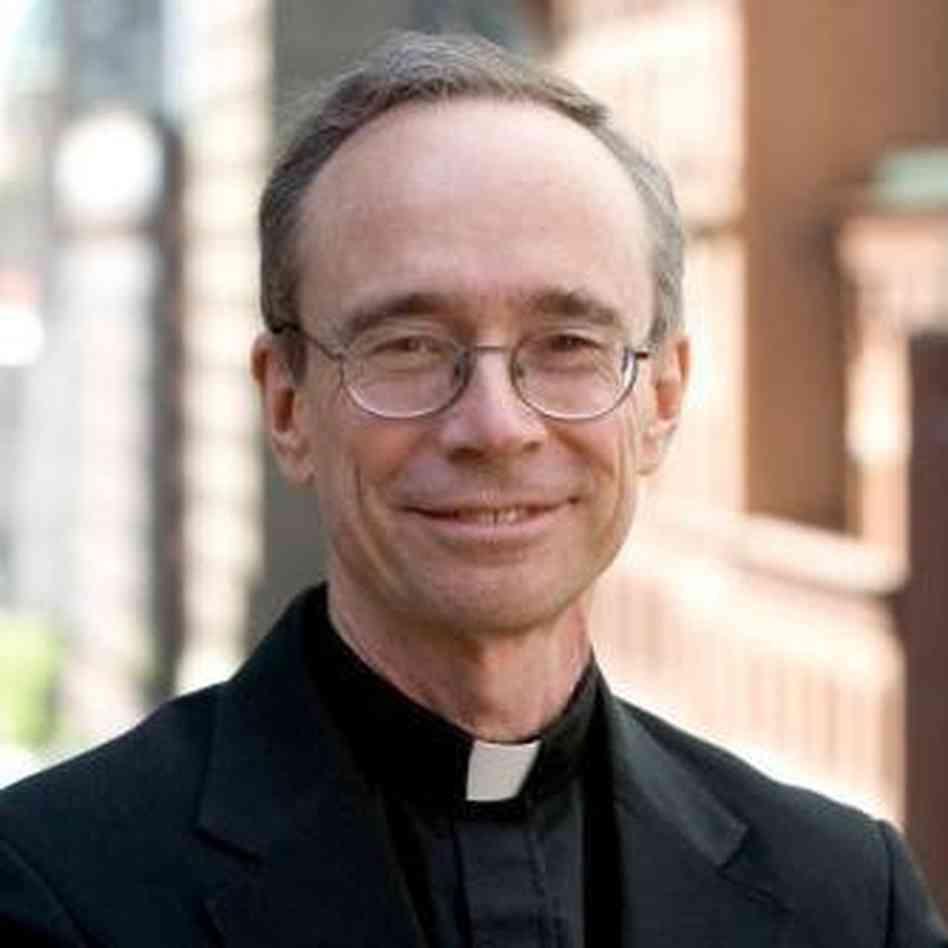
Thomas J. Reese is a senior fellow at the Woodstock Theological Center at Georgetown University, and a former editor of America, the national Catholic weekly magazine.

The Vatican released a document on the world economy on Monday that will cause heartburn in the Tea Party, but will be cheered by the folks occupying Wall Street.

This will surprise most Americans who think the pope is a Republican because he opposes abortion and gaythomas reese jesuit marriage. But when it comes to economic justice, Pope Benedict XVI is to the left of President Obama. Heck, he is even to the left of Nancy Pelosi.Those who read the pope’s 2009 encyclical “Caritas in Veritate (Charity in Truth)” will not be surprised by this new document. In that encyclical, the pope decried “corruption and illegality” among economic and political elites in both rich and poor countries. He told financiers they must rediscover the ethical foundation of their activity and stop abusing savers. He wants a radical rethinking of economics so that it is guided not simply by profits but by “an ethics which is people-centered.”

Benedict notes that economic “inequalities are on the increase” across the globe. He does not accept the trickle-down theory, which says that all boats will rise with the economic tide. Benedict condemns the “scandal of glaring inequalities” and sees a role for government in the redistribution of wealth.

Yes, you heard that right. The pope favors the redistribution of wealth. When was the last time you heard a liberal Democrat use those words?

The pope also disagrees with those who believe that the economy should be free of government regulation. An unregulated economy “shielded from ‘influences’ of a moral character has led man to abuse the economic process in a thoroughly destructive way,” he writes. This has “led to economic, social and political systems that trample upon personal and social freedom, and are therefore unable to deliver the justice that they promise.”

Critics have complained that the Occupy Wall Street movement has no program. The people in the movement could do a lot worse than to study what the pope has said about the economy. Sadly, few Catholics know of the church’s teaching on economic justice, which has been called the church’s best-kept secret.

The pope does not have a magic plan to restore economic prosperity, but he does focus on the values that a political and economic system must support. The priority, he says, must be “access to steady employment for everyone.” And that means not just here in the United States, but also in the developing world, where we must rescue “peoples, first and foremost, from hunger, deprivation, endemic diseases and illiteracy.”

So if you are having a tea party, don’t bother inviting the pope; he won’t come. But if you see a white, solar-powered car heading toward Wall Street, it might just be the popemobile.

CatholicNews.Com

VATICAN CITY (CNS) — The world authority envisioned by two popes as a way to ensure global peace and justice would not be a superpower, but primarily a moral force with limited jurisdiction, Pope Benedict XVI said.

The pope made his remarks Dec. 3 to a plenary session of the Pontifical Council for Justice and Peace, which was scheduled to meet for three days to discuss the theme of “political authority and global governance.”

In his address, Pope Benedict recalled that Blessed John XXIII had called for the “construction of a world Pope-620x395community, with a corresponding authority,” to serve the “common good of the human family.”

The pope also cited his own 2009 encyclical “Caritas in Veritate,” in which he called for a “true world political authority” to ensure international cooperation, peace and environmental protection.

The church offers “principles of reflection, criteria of judgment and practical guidelines” for such an organization, but no concrete legal or political recommendations, Pope Benedict said in his address.

Yet the pope stipulated that the proposed body would not be a “superpower, concentrated in the hands of a few, which would dominate all peoples, exploiting the weakest.” The authority in question, he said, “must be understood, first and foremost, as a moral force, a power to influence in accordance with reason, that is, a participatory authority, limited by law in its jurisdiction.”

The council’s president, Cardinal Peter Turkson, told Vatican Radio that the agenda for the plenary session would include the topic of global financial governance as a response to the world financial crisis.

In October 2011, the council called for establishment of a “central world bank” to regulate the global financial industry and the international money supply as a step toward the world authority envisioned by Blessed John and Pope Benedict.

Pope Benedict’s address also touched on threats to human dignity from different forms of materialism in contemporary culture.

“The man of today is considered primarily from a biological point of view, or as ‘human capital,’ a ‘resource,’ a cog in a productive and financial machine that dominates him,” the pope said.

“New ideologies — such as the hedonistic and egoistic one of sexual and reproductive rights, or that of a disorderly financial capitalism that transgresses politics and dismantles the real economy — contribute to make the employee and his work seem ‘minor’ goods and to undermine the natural foundations of society, especially the family,” he said.

END

The conflict is capitalism vs. communism, and the compromise/”third way”, which is Communitarianism, which is a merging of capitalism & communism. Communitarianism is consistent with “Rerum Novarum – Catholic Social Teaching“, because it takes away from the individualism of capitalism by stressing the importance of  individuals being within, and contributing to the common good of the, community. The community that Rome has in mind is “the world”.

Related articles are listed below:

  1. Radical Takerover Pt. 5 – Rome’s Social Justice & Communism
  2. The New Christianity Pt. 7 – All Roads Lead to Rome
  3. Obama’s Communitarianism

Radical Takeover Pt. 2 – Pedophiles in High Places & Their Influence

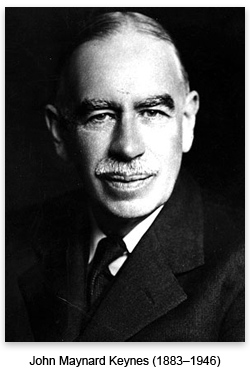
JohnMaynardKeynes

Western society has been turned upside down by radical liberal philosophies, such as Social Marxism, and its efforts to create a completely secular society, in which traditional morality, and its family values,  are seen as restrictive, and even evil. This moral decline can be seen in the arts & entertainment industry, strange sex cults among celebrities, and the sex education curriculum of UNESCO. This change in morality also includes the lowering of the age of consent for minors, and well as the sexualization of children. The British economist, John Maynard Keynes, was both a Fabian Socialist and a pedophile. He was also an advocate for the present moral decline of western society.

Below is an excerpt from “KEYNES AT HARVARD“, which reveals the corrupt mind, and actions of Keynes.

In 1967 the world was startled by the publication of the letters between Lytton Strachey and Maynard Keynes. Undisputed evidence in their private correspondence shows that Keynes was a life-long sexual deviate.(12) What was more shocking was that these practices extended to a large group. Homosexuality, sado-masochism, lesbianism, and the deliberate policy of corrupting the young was the established practice of this large and influential group which eventually set the political and cultural tone for the British Empire.

Keynes’ sexual partner, Lytton Strachey, indicated that their sexual attitudes could be infiltrated, “subtly, through literature, into the bloodstream of the people, and in such a way that they accepted it all quite naturally, if need be, without at first realizing what it was to which theywere agreeing.” He further explained, privately, that, “he sought to write in a way that would contribute to an eventual change in our ethical and sexual mores—a change that couldn’t ‘be done in a minute,’ but would unobtrusively permeate the more flexible minds of young people.”(13) This is a classic expression of the Fabian socialist method of seducing the mind. This was written in 1929 when it was already in practice for over forty years. It is no wonder we are reaping the whirlwind of student disorders where drug addiction and homosexuality rule the day.Keynes and his fellow voluptuaries made numerous excursions to the resorts ringing the Mediterranean, where little boys were sold by their parents to bordellos catering to homosexual appetites.(14)The practice of crudely castrating small boys (where most died from infection or shock) to provide effeminized children for the edification of depraved visitors is a well-authenticated historical fact.(15) Boys from the ages of seven up to twelve were subjected to sadistic carnal abuse. Since in almost every instance these children were sold into sexual slavery by desperately poor parents who were steeped in ignorance and superstition, it sheds an insight into the hypocrisy of Fabians like Keynes, who aimed propaganda shafts at private enterprise in England and America because it did not guarantee full employment. He and his fellow leftist reformers however, had no compunction in exploiting human degradation and misery in Tunis, Algeria, Morocco, Egypt and Constantinople (Istanbul). These served as convenient spawning grounds for the establishment of enclosed brothels filled with children, who were compelled to satisfy the unnatural lusts of high-born English socialists.(16)Keynes always ready to guide others freely advised his fellow debauchees to go to Tunis, “where ‘bed and boy’ were also not expensive.”(17)This circle of sexual deviates consisted of a considerable number of participants. They were augmented by a larger group of prurient Bohemians who secured vicarious pleasures either as bisexuals or as voyeurs. Most lived off inherited incomes or family patronage. Attachment to Fabian socialism was endemic to this group. They came under the general appellation of “the Bloomsbury Group.” This orgiastic vortex had as its axis, Gordon Square in London. Keynes owned No. 46 and the Stracheys possessed No. 41. As one wit sarcastically put it, “all couples were triangles who lived in squares.”(18) Critics assigned to the ‘Bloomsberries,’ “Strange rites, sinister rituals and unmentionable initiation ceremonies. . . .”(19)In academic deviate circles, Keynes acquired underground fame as a skilled connoisseur who was able to spot potential material for future debauchment among the male children at Eton (eight to sixteen years of age), as well as the youth of Cambridge. The Keynes-Strachey correspondence is replete with reports of such expeditions to both Eton and Cambridge University. Lytton Strachey wrote a poetic amoretto about his bed partner, Keynes, in which he classed him, “A liberal and a sodomite, An atheist and a statistician.(20) In a fit of pique he once exclaimed, “Keynes sits like a decayed and amorous spider in King’s . . .” (Cambridge University).(21) Strachey’s chief biographer observed that the letters passing between his subject and Keynes, “would have provoked curiousity in Gomorrah and caused the inhabitants of Sodom to sit up and take note.”(22) It is noted that, “For several years Lytton’s intimate personal life was bound up with that of Keynes. . . .”(23) On one of their trips to the Mediterranean theatre of sexual aberrations, Strachey wrote of lounging around, “discussing ethics and sodomy with Keynes.”(24) Asking Lytton Strachey to spend time with him, Keynes once wrote, “my bed is depressingly disengaged all this month”(25)

Jimmy Savile has also been exposed as a predator of children, who was never accused of any crime during his life time. To learn more on this matter, click on the link entitled “JIMMY SAVILE WAS PART OF SATANIC RING“.

Former child actor, Corey Feldman, has reported pedophilia to be the biggest secret in Hollywood. To see his interview, click on the link entitled “Corey Feldman: Pedophilia Is Hollywood’s Biggest Problem“.

To learn about how this radical takeover of pedophilia has infiltrated the highest offices in society, click on the link entitled “The-Kinsey-Syndrome“. The Kinsey Syndrome is a documentary on the life’s work of Alfred Kinsey, which describes how his criminal actions were used to changed America’s judgments on child sex offenders, and the present day affects, of his work, on society.

Related articles are listed below:

  1. Roman Catholic Sex Abuse Report on ‘Representative statistics on offenders and victims’
  2. PRIEST SCANDALS IN AUSTRALIA

Radical Takeover Pt. 1 – CULTURAL MARXISM: The Corruption of America

CulturalMarxism

OriginalIntentDoc

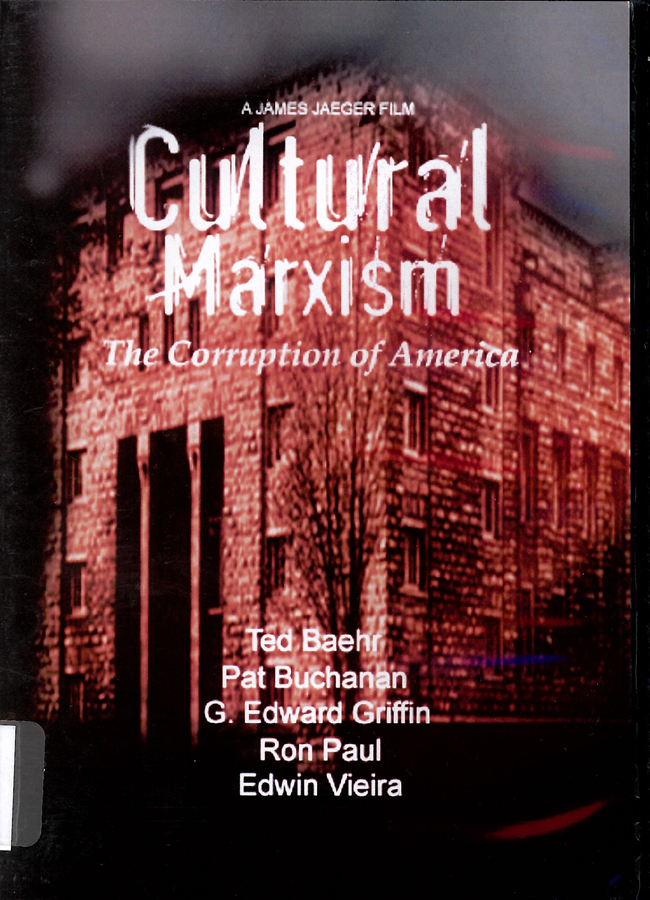
A James Jaeger Film featuring RON PAUL, Congressman/Presidential Candidate; PAT BUCHANAN, Author/Political Analyst; G. EDWARD GRIFFIN, Author/Producer; EDWIN VIEIRA, Author/Constitutional Attorney and TED BAEHR, Founder of MovieGuide and Christian Film & TV Commission — CULTURAL MARXISM explores the love affair with collectivist ideologies that has lead to ever bigger government and the welfare-warfare state. Find out how the Frankfurt School, a Marxist splinter group, established itself at Columbia University and began “the long march through the institutions.” The idea was, and still is, to infiltrate every corner of Western culture and pervert traditional Christian values with “political correctness” and Marxist ideologies. The ultimate goal is to destroy American free-enterprise capitalism by undermining its economic engine, the Middle Class, and the basic building block of society: the Family Unit.

To watch the film, click on the link entitled “CULTURAL MARXISM: The Corruption of America“.

2013: The Year of Unmasking Truth; The New Real Talk Radio Show

utnJoin us as we kick of the new year with a fantastic show! We will recap all of the important events of 2012 from the election to hurricane Sandy along with other events. We will also kick off a three month show in our new “Unmasking” series by taking a look at what makes up a cult and how we should deal with them biblically. We’ll be joined by our very own master blogger Brian “The Doulos” Feaster of the Urban Truth Network blog sharing his insights from the word of God and his unique perspective. As always Double “L” will bring her wit and snappy humor to the table as we discuss the important issues of the day from a biblical perspective. The “LIVE” chat room and phone lines will be open for you to express your views on any topic. Come join us!

To listen to the show, click on the link entitled “Unmasking Truth: The Christian Cults Yesterday and Today“.

Related article: “The New Real Talk Radio Show

The New Christianity Pt. 12 – Alice Bailey & The Christian World Servers

world servers

WorldServerFoundation.Org

Vision and Mission

Our vision

Our vision is a world where collaboration and co-operation are recognised as essential in solving the contemporary challenges – social, economic, political and environmental – facing the global community.

Mission statement

The mission of the World Servers Foundation is to highlight and facilitate the positive work of others and to promote and cultivate the inherent ability within all human beings to bring about positive change.

We believe that co-operation and collaboration are vital next steps in human history and that these will be essential features of our longer-term survival.

On a daily basis we will contribute to a more stable and co-operative world community through:

Education and Encouragement – Providing courses and retreats for people who are in a position to influence, motivate and educate others. These courses and retreats will provide a forum for fresh perspectives on the nature of education and human development and will help key decision makers and educators bring about positive change within their respective fields and to leverage this position for wider impact.

Providing a platform for global discussion and debate that enables individuals and organisations at all levels, in every country, to tell their story, express their feelings, highlight key issues and showcase work in all areas related to positive change.

Using the media and the power of the internet as a collaborative educational platform.

Creativity and Connection – Network building: locating, connecting and communicating the initiatives worldwide which are serving the good of their communities and providing ways for others to be involved and further this work.

To identify and connect groups and individuals in areas such as education, science, the arts, business, charity and politics who are aligned with this vision and mission, making their service more visible and tangible.

To provide platforms for practical expression, action, creativity, discussion and collaboration.

Neutrality – To maintain religious, social and political neutrality, free from the influence of any particular country, organisation or group.

This mission stems from our desire to make visible the power of the human spirit and goodwill by highlighting those thoughts and actions that go beyond individual interests and serve the good of the whole.Through this work we aim to educate and encourage others and therefore increase the pace and volume of positive change around the world to meet our core vision.

Continue Reading…

The herald of the “world servers” was occultist, Alice Bailey, who was the founder of Lucis Trust, which was originally Alice-baileyfounded as Lucifer Trust in the early 1920’s. Bailey was a Luciferian, a the herald of the New Age, and she wrote extensively about the coming new world order, and its “world servers”. She described the world servers in the following:

Lucis Trust

The “world servers” are people who seek to serve the good of the whole, share the same consciousness, carries out every activity which forwards, and fosters, good will and right relations. They seek to be harmless, constructive, and inclusive, in their thinking, and in their actions. World servers are active in all fields of life, and all countries. They are laying the foundations for right relations, and world unity. The new group of world servers is a living organization. It is not an organization. It has no headquarters, or official representatives. Every person, in every country, who is living a life of service to the good of the whole, is a member of the group. Every man, and woman, in every country, who is working to heal the breeches between people, to evoke a sense of brotherhood, to foster a sense of mutual interrelation, and interdependence, and who sees no racial, national, nor religious barriers, are part of the new group of world servers, even if they never heard of it by name. Members of the group are active in all branches of human enterprise. They include creative workers, psychologists, teachers, scientists, political workers, religious workers, business people, financiers, labor & management, environmentalists, and human rights workers.

 For more information on Alice Bailey’s description of the “world servers”, click on the link entitled “The New Group of World Servers“.

Tony Blair, who is a member of the Fabian Society has established the Tony Blair Faith Foundation, which includes Pastor of Saddleback Church, and author of “The purpose Driven Life”, Rick Warren, as one of the members of its religious advisory council. Rick Warren has been highly involved in working for world peace & security by his rick warrenhumanitarian work in countries around the world through church planting, and has even signed a document which affirms the Universalist’s claim that the God of Christians and the god of Islam is the same god, who they both serve for the sake of world peace, called “A Christian Response to ‘A Common Word between Us and You’“. According to the statement below, the Tony Blair Faith Foundation is geared toward the same agenda as Alice Bailey’s “world servers”, by using religion as a tool to secure, and sustain, world peace.

The Tony Blair Faith Foundation

 The Tony Blair Faith Foundation promotes understanding and respect between the world’s major religions. We believe this is central to a policy to secure sustained peace.

The world continues to become increasingly interconnected. Old boundaries of culture and identity are being eroded. However, faith has remained at the core of life for billions of people. It underpins systems of thought and behaviour.

Faith can be used to unite people around a common cause. But too often, faith can also be distorted and used to fan the flames of hatred and extremism.

The Tony Blair Faith Foundation supports and collaborates with those who seek peace. We educate and develop understanding about religion in the modern world by promoting leadership, literacy and lives.

  • Leadership: we seek to ensure that current and future leaders understand the role religion plays in the modern, globalising world.
  • Literacy: we educate and support young people to help them become global citizens.
  • Lives: we help religious communities in 140+ countries work together to save lives.

We do this through three innovative programmes Faith and Globalisation Initiative, Faiths Act, and Face to Faith.

The Christian “world servers” can be seen in world-wide church planting initiatives that seeks spiritual, social, and cultural transformation of entire cities and regions, which is not evangelism, but the changing of various people’s world views for the purpose of uniting the church with the secular communities of the world. Below is an example of global church planting of Christians, who’s, ecumenical, dominionist’s agenda, reflects the agenda of the “world servers”.

Global Church Advancement

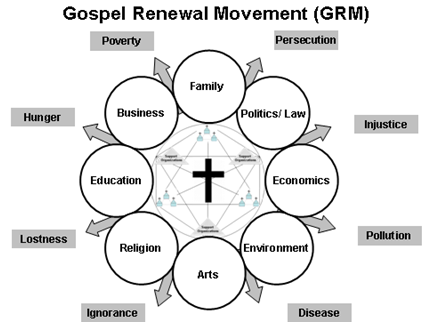
This GCA Church Planting and Renewal Conference is an inter-denominational training event designed to equip church planters, pastors, and lay-leaders to start, grow and multiply healthy, gospel-centered churches that result in the spiritual, social and cultural transformation of entire cities and regions.

Christian leaders from more than 50 countries, representing over 300 denominations and mission agencies, have taken this church planter training.

Our Plan –

In order to best accomplish our strategy, GCA has designed a tactical plan to equip church leaders to start, grow and multiply Gospel-Centered Churches that intentionally form Church Planting Networks and Alliances that will, by God’s grace, birth Church Planting Movements and Gospel Renewal Movements. This is the strategy through which we pray that God’s invisible Kingdom will be made visible among social gospelall nations—resulting in the fulfillment of the Great Commission (Matt. 28:16-20). This plan includes starting, growing and multiplying:

Churches

A Gospel-Centered Church focuses its ministries primarily on: 1) Evangelism (good news for the lost), 2) discipleship (good news for the found), and 3) societal transformation (good news for the community). A Gospel-Centered Church shares a Kingdom vision for the spiritual, social and cultural renewal of its community, region, nation and the world through starting, growing and multiplying churches by the power of the gospel in word and deed. The plan is not merely to start Gospel Centered Churches but also Church Planting Networks.

Timothy Keller, Pastor of Redeemer Presbyterian Church, who also teaches this false gospel of cultural renewal, described his approach to proclaiming the gospel of cultural transformation below, which also reflects the agenda of the world servers, but on a city-wide scale, instead of nation wide.

ChristianityToday.Com

First, that Christ changes the way we use wealth and power. Our understanding of work must reflect what Robert Bellah (from his book, Habits of the Heart) describes as a contribution to the common good. Along this line, I’d express a desire to populate the city with people who embody this vision. I’dTim Keller Headshot want to see an explosion of philanthropy, in which we don’t spend money on ourselves, but instead cooperate with others who want to make the city a desirable place to live. Much like Wilberforce did in the early part of 19th-century England, we would pursue healing and redemption.

Second, I would address artists and thought-leaders, emphasizing that Christians have a positive outlook for the future over and against the dystopian pessimism that so often characterizes evangelicals. We are not naïve about suffering and evil, but we have a long term hope for society that can seize an ordinary life.

Third, we’d like to encourage growing civility and true pluralism in our society, that is, to counteract anger and contribute to the creation of an atmosphere of mutual respect among people of differing beliefs.

What makes the Christian “world servers” different from the secular “world servers” is their traditional views on morality, such as their opposition to same sex marriage, and abortion. Nevertheless, each younger generation becomes more liberal, due to the culture’s secular education, the influence of the secular media, mainstream arts & entertainment, and the growing liberal Christianity. The result of the growth in liberal Christian views will cause the true followers of Christ, who strictly adhere to Scripture, and separate themselves from the world’s herd mentality, to seem like a strange fringe group among Christians, who are out of touch with, what the world is now learning to believe is, Christ’s work of redemption, and Christian love, peace, unity, humility, and godliness. But this false Christianity cannot put out the light of the gospel. Instead, it will only cause its proclamation to shine brighter by way of the church’s love for one another, and through the boldness of their preaching in the midst of persecution.

Matthew 5

10    Blessed are they which are persecuted for righteousness sake: for theirs is the kingdom of heaven.
11    Blessed are ye, when men shall revile you, and persecute you, and shall say all manner of evil against you falsely, for my sake.
12    Rejoice, and be exceeding glad: for great is your reward in heaven: for so persecuted they the prophets which were before you.
13    Ye are the salt of the earth: but if the salt have lost his savour, wherewith shall it be salted? it is thenceforth good for nothing, but to be cast out, and to be trodden under foot of men.
14    Ye are the light of the world. A city that is set on an hill cannot be hid.
15    Neither do men light a candle, and put it under a bushel, but on a candlestick; and it giveth light unto all that are in the house.
16    Let your light so shine before men, that they may see your good works, and glorify your Father which is in heaven.

John 13

34    A new commandment I give unto you, That ye love one another; as I have loved you, that ye also love one another.
35    By this shall all men know that ye are my disciples, if ye have love one to another.

Matthew 10

34    Think not that I am come to send peace on earth: I came not to send peace, but a sword.
35    For I am come to set a man at variance against his father, and the daughter against her mother, and the daughter in law against her mother in law.
36    And a man’s foes shall be they of his own household.
37    He that loveth father or mother more than me is not worthy of me: and he that loveth son or daughter more than me is not worthy of me.
38    And he that taketh not his cross, and followeth after me, is not worthy of me.
39    He that findeth his life shall lose it: and he that loseth his life for my sake shall find it.

2Thessalonians 1

3    We are bound to thank God always for you, brethren, as it is meet, because that your faith groweth exceedingly, and the charity of every one of you all toward each other aboundeth;
4    So that we ourselves glory in you in the churches of God for your patience and faith in all your persecutions and tribulations that ye endure:
5    Which is a manifest token of the righteous judgment of God, that ye may be counted worthy of the kingdom of God, for which ye also suffer:
6    Seeing it is a righteous thing with God to recompense tribulation to them that trouble you;
7    And to you who are troubled rest with us, when the Lord Jesus shall be revealed from heaven with his mighty angels,
8    In flaming fire taking vengeance on them that know not God, and that obey not the gospel of our Lord Jesus Christ:
9    Who shall be punished with everlasting destruction from the presence of the Lord, and from the glory of his power;
10    When he shall come to be glorified in his saints, and to be admired in all them that believe (because our testimony among you was believed) in that day.
11    Wherefore also we pray always for you, that our God would count you worthy of this calling, and fulfil all the good pleasure of his goodness, and the work of faith with power:
12    That the name of our Lord Jesus Christ may be glorified in you, and ye in him, according to the grace of our God and the Lord Jesus Christ.

1Thessalonians 5

1    But of the times and the seasons, brethren, ye have no need that I write unto you.
2    For yourselves know perfectly that the day of the Lord so cometh as a thief in the night.
3    For when they shall say, Peace and safety; then sudden destruction cometh upon them, as travail upon a woman with child; and they shall not escape.
4    But ye, brethren, are not in darkness, that that day should overtake you as a thief.
5    Ye are all the children of light, and the children of the day: we are not of the night, nor of darkness.
6    Therefore let us not sleep, as do others; but let us watch and be sober.
7    For they that sleep sleep in the night; and they that be drunken are drunken in the night.
8    But let us, who are of the day, be sober, putting on the breastplate of faith and love; and for an helmet, the hope of salvation.
9    For God hath not appointed us to wrath, but to obtain salvation by our Lord Jesus Christ,
10    Who died for us, that, whether we wake or sleep, we should live together with him.
11    Wherefore comfort yourselves together, and edify one another, even as also ye do.

John 16

1    These things have I spoken unto you, that ye should not be offended.
2    They shall put you out of the synagogues: yea, the time cometh, that whosoever killeth you will think that he doeth God service.
3    And these things will they do unto you, because they have not known the Father, nor me.
4    But these things have I told you, that when the time shall come, ye may remember that I told you of them. And these things I said not unto you at the beginning, because I was with you.
33    These things I have spoken unto you, that in me ye might have peace. In the world ye shall have tribulation: but be of good cheer; I have overcome the world.

1John 5

1    Whosoever believeth that Jesus is the Christ is born of God: and every one that loveth him that begat loveth him also that is begotten of him.
2    By this we know that we love the children of God, when we love God, and keep his commandments.
3    For this is the love of God, that we keep his commandments: and his commandments are not grievous.
4    For whatsoever is born of God overcometh the world: and this is the victory that overcometh the world, even our faith.
5    Who is he that overcometh the world, but he that believeth that Jesus is the Son of God?
6    This is he that came by water and blood, even Jesus Christ; not by water only, but by water and blood. And it is the Spirit that beareth witness, because the Spirit is truth.
18    We know that whosoever is born of God sinneth not; but he that is begotten of God keepeth himself, and that wicked one toucheth him not.
19    And we know that we are of God, and the whole world lieth in wickedness.
20    And we know that the Son of God is come, and hath given us an understanding, that we may know him that is true, and we are in him that is true, even in his Son Jesus Christ. This is the true God, and eternal life.

Revelation 1

7    Behold, he cometh with clouds; and every eye shall see him, and they also which pierced him: and all kindreds of the earth shall wail because of him. Even so, Amen.

Revelation 2

24 I will put upon you none other burden.
25    But that which ye have already hold fast till I come.
26    And he that overcometh, and keepeth my works unto the end, to him will I give power over the nations:
27    And he shall rule them with a rod of iron; as the vessels of a potter shall they be broken to shivers: even as I received of my Father.
28    And I will give him the morning star.
29    He that hath an ear, let him hear what the Spirit saith unto the churches.

Revelation 22

11    He that is unjust, let him be unjust still: and he which is filthy, let him be filthy still: and he that is righteous, let him be righteous still: and he that is holy, let him be holy still.
12    And, behold, I come quickly; and my reward is with me, to give every man according as his work shall be.
13    I am Alpha and Omega, the beginning and the end, the first and the last.
14    Blessed are they that do his commandments, that they may have right to the tree of life, and may enter in through the gates into the city.
15    For without are dogs, and sorcerers, and whoremongers, and murderers, and idolaters, and whosoever loveth and maketh a lie.
16    I Jesus have sent mine angel to testify unto you these things in the churches. I am the root and the offspring of David, and the bright and morning star.
17    And the Spirit and the bride say, Come. And let him that heareth say, Come. And let him that is athirst come. And whosoever will, let him take the water of life freely.
20    He which testifieth these things saith, Surely I come quickly. Amen. Even so, come, Lord Jesus.
21    The grace of our Lord Jesus Christ be with you all. Amen.

Related articles are listed below:

  1. The Emerging Third Way of Apostate Pastors and Globalist Leaders
  2. Emphasis Shifts for New Breed of Evangelicals
  3. War on Consciousness Pt. 17 – IB’s “World Peace” Indoctrination

The New Christianity Pt. 11 – Commentary by Ken Silva on the Modern Church

elephant-room-panel

SAIDRadio.Net

Today we were blessed to interview Ken Silva of Apprising Ministries and Pastor of Conneticut River Baptist Church Claremont, New Hampshire. Today Ken will give us some background on how Apprising Ministries got started, comment on modern day christian worship, the emergent church’s impact on today’s church, the connection b/w the word faith / seeker driven movement among many other topics. We hope you are blessed, let’s listen in.
Click here to listen or right click to save an mp3 of our interview:

http://ccodtruth.org/InterviewSAIDRadioKenSilva.mp3

Ken’s Website:
www.apprising.org

Related links are listed below:

  1. Church of Tares: Purpose Driven, Seeker Sensitive, Church Growth, and New World Order
  2. Religious Trojan Horse ~ By Brannon Howse
  3. The New Christianity Pt. 6 – The “New Age” Experience-Based Religion

Test All Things Pt. 4 – Being “Missional”

incarnational

Is the Jesus of incarnational ministry the same as the Jesus that is presented in Scripture?

This question must be asked in light of the new movement in evangelicalism, known as being “missional” and “incarnational”. Many Reformed Theology adherents are following this movement with zeal, and are even learning about it in seminaries, such as Westminster Theological Seminary. Incarnational ministry is built upon the, Pelagian, “substitutionary theory” of Christ’s Atonement, which claims that Christ came into the world to give mankind a moral example of how to live. Although this is being taught in Reformed Seminaries, it is not being taught to the exclusion of the, Reformed, “vicarious substitutionary” view of the Atonement, which rightly claims that Christ came into the world to pay the penalty for the sins of mankind (Romans 3:21-26, Romans 5:18-19) . Therefore, two doctrines are being merged as one within the minds of many new Calvinists.

This merging of the two views of Christ’s Atonement is the basis for incarnational ministry, which is an attempt to follow Christ’s example of being a humanitarian, for the purpose of evangelism, and, for some, bringing about the kingdom of God on earth, as though the church age is the thousand year reign of Christ on earth. This movement holds a promise of a better world, which will be brought about through the good works of one’s own hands, for many who follow it. This better world is to be realized by taking on the social problems of the world as though the church has been empowered by Christ to put an end to the affects of sin, such as poverty, war, and tyranny (Revelation 6:1-6). This is why many new Calvinists claim to be on a mission of reclaiming the culture, and even creation itself. Many have even taken the focus off of evangelism, and have, instead, began teaching the Jesus came to reconcile all creation to himself, and therefore, he has reconciled his church to creation. They are also teaching that God made mankind to be creators, just as God is a creator. This belief that the church will bring about the redemption of all things is consistent with the 1679 “Prophecy of the Coming Kingdom by the Christian mystic, Jane Lead, minus the conversion of the world through signs, and wonders, but it is inconsistent with the teachings of Scripture.

In order to believe that the church is able to bring about a better world, certain Biblical truths must be ignored, misinterpreted, and even completely thrust aside.  One of those truths is Revelation 12, which teaches that Satan has been cast down to the earth, and is full of wrath, because he knows that he only has a short time to persecute Christians. Also, 2Corinthians 4:4 teaches that Satan is the ruler of this world. Daniel 12, Revelation 13, 19 and 20, shows that Christians will endure persecution, and murder, until Christ returns, and destroys this present world’s system, and sets up his own kingdom, which is the kingdom of Heaven come down to earth. These passages, and many others, prove that Christ did not send his church to reclaim, or to transformed, the culture, because it is Satan’s territory. Jesus’ return to earth,  and nothing else, will transform this world.

Christ’s incarnation was not centered on humanitarianism, but saving lost souls from eternal punishment, and reconciling them to God. Jesus clearly affirms this when he said “…the Son of man is come to seek and to save that which was lost”, and “…as Moses lifted up the serpent in the wilderness, even so must the Son of man be lifted up: That whosoever believeth in him should not perish, but have eternal life. For God so loved the world, that he gave his only begotten Son, that whosoever believeth in him should not perish, but have everlasting life. For God sent not his Son into the world to condemn the world; but that the world through him might be saved” (Luke 19:10, John 3:14-17). Also, Christ’s ministry of preaching the gospel for the saving of the lost was the same ministry that he gave to his Apostles. That is why Jesus said “Thus it is written, and thus it behoved Christ to suffer, and to rise from the dead the third day:
And that repentance and remission of sins should be preached in his name among all nations, beginning at Jerusalem. And ye are witnesses of these things. And, behold, I send the promise of my Father upon you: but tarry ye in the city of Jerusalem, until ye be endued with power from on high”, “…and ye shall be witnesses unto me both in Jerusalem, and in all Judaea, and in Samaria, and unto the uttermost part of the earth” (Luke 24:46-49, Acts 1:8). That is why Paul said, “all things are of God, who hath reconciled us to himself by Jesus Christ, and hath given to us the ministry of reconciliation; To wit, that God was in Christ, reconciling the world unto himself, not imputing their trespasses unto them; and hath committed unto us the word of reconciliation. Now then we are ambassadors for Christ, as though God did beseech you by us: we pray you in Christ’s stead, be ye reconciled to God. For he hath made him to be sin for us, who knew no sin; that we might be made the righteousness of God in him.” (2Corinthians 5:18-21).

Therefore, the Jesus of incarnational ministry, who came into the world to empower his church to teach the world how incarnational ministryto be good people, is not the Jesus of the Bible. The real Jesus is the Savior of the world, and not a humanitarian. To merge two different teachings of who Jesus is, by teaching both the Pelagian and the vicarious substitutionary view of the Atonement, is to create a different god – a false God. According to the Apostle John, those who try to change the teachings of who Christ is, is an antichrist (1John 4:1-3).

The proof that the missional movement is not from Christ can also be found in the actions of the movement. For example: the movement is not centered on evangelism, and discipleship, but embracing the non-believing communities of the world as though it were the church; thus blurring the lines between those who are the family of God, and those who are not. This is also reinforced by applying certain passages of Scripture that only apply to the church to everyone in the community in which a local church is planted in, such as the following passage:

Matthew 25

31    When the Son of man shall come in his glory, and all the holy angels with him, then shall he sit upon the throne of his glory:
32    And before him shall be gathered all nations: and he shall separate them one from another, as a shepherd divideth his sheep from the goats:
33    And he shall set the sheep on his right hand, but the goats on the left.
34    Then shall the King say unto them on his right hand, Come, ye blessed of my Father, inherit the kingdom prepared for you from the foundation of the world:
35    For I was an hungred, and ye gave me meat: I was thirsty, and ye gave me drink: I was a stranger, and ye took me in:
36    Naked, and ye clothed me: I was sick, and ye visited me: I was in prison, and ye came unto me.
37    Then shall the righteous answer him, saying, Lord, when saw we thee an hungred, and fed thee? or thirsty, and gave thee drink?
38    When saw we thee a stranger, and took thee in? or naked, and clothed thee?
39    Or when saw we thee sick, or in prison, and came unto thee?
40    And the King shall answer and say unto them, Verily I say unto you, Inasmuch as ye have done it unto one of the least of these my brethren, ye have done it unto me.
41    Then shall he say also unto them on the left hand, Depart from me, ye cursed, into everlasting fire, prepared for the devil and his angels:
42    For I was an hungred, and ye gave me no meat: I was thirsty, and ye gave me no drink:
43    I was a stranger, and ye took me not in: naked, and ye clothed me not: sick, and in prison, and ye visited me not.
44    Then shall they also answer him, saying, Lord, when saw we thee an hungred, or athirst, or a stranger, or naked, or sick, or in prison, and did not minister unto thee?
45    Then shall he answer them, saying, Verily I say unto you, Inasmuch as ye did it not to one of the least of these, ye did it not to me.
46    And these shall go away into everlasting punishment: but the righteous into life eternal.

This passage is used to support the social efforts of the missional movement, when it is really addressing Christ command to his church to love one another, by saying “Inasmuch as ye have done it unto one of the least of these my brethren, ye have done it unto me”, and “Inasmuch as ye did it not to one of the least of these, ye did it not to me” (Matthew 25:40 & 45). The world is not Christ’s brethren, but the church is. Incarnational ministry ignores that important detail.

Some have also used the Apostles’ charge to Paul to remember the poor, which Paul was also eager to do (Galatians 2:10). But Paul’s ministry to the poor did not reflect the missional movement, because the book of Acts, as well as, Paul’s epistles, did not mention Paul caring for the poor people of the unbelieving world. Instead, what is mentioned in 2Corinthians 8 is Paul’s collection of the gifts of the Gentile churches for the relief of the poor believers in Jerusalem, which began in Acts 11:19-20, because of a great famine that impoverished Judea. No where in Scripture has Paul reflected the work of the missional movement.

Is it wrong to meet the needs of the poor?

It is wrong to call humanitarian work “the work of God”, because believing in Jesus is the work of God in the world (John 6:26-29). To call something else that Scripture does not acknowledge as “the work of God” for the church, is to take the Lord’s name in vain, and God will not hold such a person, or movement, guiltless who does this, because it is contrary to the will of Christ (Exodus 20:7, Luke 12:47-48).

Nevertheless, it is not wrong to meet the needs of the poor “For all the law is fulfilled in one word, even in this; Thou shalt love thy neighbour as thyself” (Galatians 5:14). Therefore, it is not wrong to meet the needs of poor unbelievers, but it is wrong to call this act the work of Christ’s church, or incarnational minsitry, or being missional.

It is by the church’s love for one another that the world will know that they belong to God, because they love one another just as Christ loved them (John 13:34-35). This is one of the ways that the church allows their light to shine, so that men will see their good deeds, and glorify their Father in Heaven (Matthew 5:14-16). This love for other believers is the light of the church that has been recorded in Scripture in passages such as Acts 2:42-47, Acts 4:32-37, and Acts 6:1-6). Furthermore, this kind of love was also taught by the Apostles in passages such as Romans 12:4-16, Romans 15:1-7, 1Corinthians 13, Philippians 2:1-8, James 2:14-16, 1John 3:16-19.

Therefore, the missional movement would do well to redirect its focus from the world, and onto loving the church just as Christ loved his church. A movement such as that could indeed be supported by Scripture, but the social efforts of incarnational ministry, which is nothing more than the social gospel, is the work of a different religion. This work will only serve to cause people to hope in an earth-based/works-based salvation. Such a movement is not the work of God, but it is more consistent with the ministry of white-wash, which the false prophets of Israel were well adapt in (Ezekiel 13:4-14).

In conclusion, incarnational ministry is not the work of the gospel, but it is the work of the social gospel that is deceiving Christians into putting their efforts towards helping the world to work for, and hope in, an earth-based/works-based salvation. It is causing people to be under the same condemnation that the rich man of Luke 12:16-21, who was not condemned for being greedy, but for not preparing for the more weightier matter of being justified before God. The missional movement does this by taking the focus off of evangelism, and instead, putting the focus on earthly cares, and heart-felt needs, as though that is what matters to God the most. But Scripture makes it clear, that believers must love their neighbor as themselves, and they must love the church, just as Christ loved the church, by giving his life for them. Therefore, loving the church is the orthodox focus for Christ’s church, and not incarnational ministry. The missional movement is more consistent with Rick Warren’s world wide “Purpose Driven Emerging Church movement” than the gospel of Jesus Christ.

Ezekiel 13

3    Thus says the Lord GOD: “Woe to the foolish prophets, who follow their own spirit and have seen nothing!
4    O Israel, your prophets are like foxes in the deserts.
5    You have not gone up into the gaps to build a wall for the house of Israel to stand in battle on the day of the LORD.
6    They have envisioned futility and false divination, saying, ‘Thus says the LORD!’ But the LORD has not sent them; yet they hope that the word may be confirmed.
7    Have you not seen a futile vision, and have you not spoken false divination? You say, ‘The LORD says,’ but I have not spoken.”
8    Therefore thus says the Lord GOD: “Because you have spoken nonsense and envisioned lies, therefore I am indeed against you,” says the Lord GOD.
9    “My hand will be against the prophets who envision futility and who divine lies; they shall not be in the assembly of My people, nor be written in the record of the house of Israel, nor shall they enter into the land of Israel. Then you shall know that I am the Lord GOD.
10    “Because, indeed, because they have seduced My people, saying, ‘Peace!’ when there is no peace — and one builds a wall, and they plaster it with untempered mortar —
11    say to those who plaster it with untempered mortar, that it will fall. There will be flooding rain, and you, O great hailstones, shall fall; and a stormy wind shall tear it down.
12    Surely, when the wall has fallen, will it not be said to you, ‘Where is the mortar with which you plastered it?’ ”
13    Therefore thus says the Lord GOD: “I will cause a stormy wind to break forth in My fury; and there shall be a flooding rain in My anger, and great hailstones in fury to consume it.
14    So I will break down the wall you have plastered with untempered mortar, and bring it down to the ground, so that its foundation will be uncovered; it will fall, and you shall be consumed in the midst of it. Then you shall know that I am the LORD.

Luke 12

16    And he spake a parable unto them, saying, The ground of a certain rich man brought forth plentifully:
17    And he thought within himself, saying, What shall I do, because I have no room where to bestow my fruits?
18    And he said, This will I do: I will pull down my barns, and build greater; and there will I bestow all my fruits and my goods.
19    And I will say to my soul, Soul, thou hast much goods laid up for many years; take thine ease, eat, drink, and be merry.
20    But God said unto him, Thou fool, this night thy soul shall be required of thee: then whose shall those things be, which thou hast provided?
21    So is he that layeth up treasure for himself, and is not rich toward God.

Matthew 7

21    Not every one that saith unto me, Lord, Lord, shall enter into the kingdom of heaven; but he that doeth the will of my Father which is in heaven.
22    Many will say to me in that day, Lord, Lord, have we not prophesied in thy name? and in thy name have cast out devils? and in thy name done many wonderful works?
23    And then will I profess unto them, I never knew you: depart from me, ye that work iniquity.
24    Therefore whosoever heareth these sayings of mine, and doeth them, I will liken him unto a wise man, which built his house upon a rock:
25    And the rain descended, and the floods came, and the winds blew, and beat upon that house; and it fell not: for it was founded upon a rock.
26    And every one that heareth these sayings of mine, and doeth them not, shall be likened unto a foolish man, which built his house upon the sand:
27    And the rain descended, and the floods came, and the winds blew, and beat upon that house; and it fell: and great was the fall of it.

Luke 12

42    And the Lord said, Who then is that faithful and wise steward, whom his lord shall make ruler over his household, to give them their portion of meat in due season?
43    Blessed is that servant, whom his lord when he cometh shall find so doing.
44    Of a truth I say unto you, that he will make him ruler over all that he hath.
45    But and if that servant say in his heart, My lord delayeth his coming; and shall begin to beat the menservants and maidens, and to eat and drink, and to be drunken;
46    The lord of that servant will come in a day when he looketh not for him, and at an hour when he is not aware, and will cut him in sunder, and will appoint him his portion with the unbelievers.
47    And that servant, which knew his lord’s will, and prepared not himself, neither did according to his will, shall be beaten with many stripes.
48    But he that knew not, and did commit things worthy of stripes, shall be beaten with few stripes. For unto whomsoever much is given, of him shall be much required: and to whom men have committed much, of him they will ask the more.

1Corinthians 3

9    For we are labourers together with God: ye are God’s husbandry, ye are God’s building.
10    According to the grace of God which is given unto me, as a wise masterbuilder, I have laid the foundation, and another buildeth thereon. But let every man take heed how he buildeth thereupon.
11    For other foundation can no man lay than that is laid, which is Jesus Christ.
12    Now if any man build upon this foundation gold, silver, precious stones, wood, hay, stubble;
13    Every man’s work shall be made manifest: for the day shall declare it, because it shall be revealed by fire; and the fire shall try every man’s work of what sort it is.
14    If any man’s work abide which he hath built thereupon, he shall receive a reward.
15    If any man’s work shall be burned, he shall suffer loss: but he himself shall be saved; yet so as by fire.
16    Know ye not that ye are the temple of God, and that the Spirit of God dwelleth in you?
17    If any man defile the temple of God, him shall God destroy; for the temple of God is holy, which temple ye are.
18    Let no man deceive himself. If any man among you seemeth to be wise in this world, let him become a fool, that he may be wise.
19    For the wisdom of this world is foolishness with God. For it is written, He taketh the wise in their own craftiness.
20    And again, The Lord knoweth the thoughts of the wise, that they are vain.